This old version of Proteopedia is provided for student assignments while the new version is undergoing repairs. Content and edits done in this old version of Proteopedia after March 1, 2026 will eventually be lost when it is retired in about June of 2026.
Apply for new accounts at the new Proteopedia. Your logins will work in both the old and new versions.
Neutrophil gelatinase-associated lipocalin
From Proteopedia
(Redirected from Lcn1)
| |||||||||||
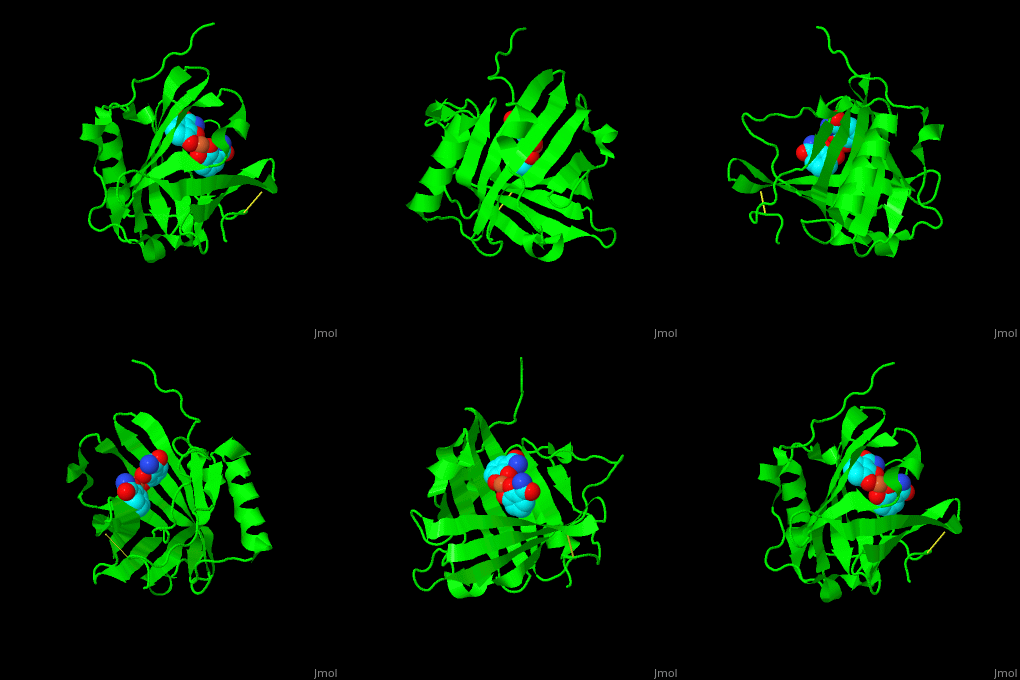
3D structures of neutrophil gelatinase-associated lipocalin
Updated on 16-July-2023
References
- ↑ Friedl A, Stoesz SP, Buckley P, Gould MN. Neutrophil gelatinase-associated lipocalin in normal and neoplastic human tissues. Cell type-specific pattern of expression. Histochem J. 1999 Jul;31(7):433-41. PMID:10475571
- ↑ Dartt DA. Tear lipocalin: structure and function. Ocul Surf. 2011 Jul;9(3):126-38. PMID:21791187
- ↑ Viau A, El Karoui K, Laouari D, Burtin M, Nguyen C, Mori K, Pillebout E, Berger T, Mak TW, Knebelmann B, Friedlander G, Barasch J, Terzi F. Lipocalin 2 is essential for chronic kidney disease progression in mice and humans. J Clin Invest. 2010 Nov;120(11):4065-76. doi: 10.1172/JCI42004. PMID:20921623 doi:http://dx.doi.org/10.1172/JCI42004
- ↑ Holmes MA, Paulsene W, Jide X, Ratledge C, Strong RK. Siderocalin (Lcn 2) also binds carboxymycobactins, potentially defending against mycobacterial infections through iron sequestration. Structure. 2005 Jan;13(1):29-41. PMID:15642259 doi:10.1016/j.str.2004.10.009
