This old version of Proteopedia is provided for student assignments while the new version is undergoing repairs. Content and edits done in this old version of Proteopedia after March 1, 2026 will eventually be lost when it is retired in about June of 2026.
Apply for new accounts at the new Proteopedia. Your logins will work in both the old and new versions.
User:Marvin O'Neal/OspC
From Proteopedia
(→'''Introduction''') |
|||
| Line 7: | Line 7: | ||
=='''Introduction'''== | =='''Introduction'''== | ||
| - | Lyme disease is a typical epidemic in northeastern region. The patients begin with skin lesions which later develop into more severe neurological and cardiac symptoms. Human Lyme disease is the most prevalent tick-borne disease which is caused by ''Borrelia burgdoferi'' | + | Lyme disease is a typical epidemic in northeastern region. The patients begin with skin lesions which later develop into more severe neurological and cardiac symptoms. Human Lyme disease is the most prevalent tick-borne disease which is caused by ''Borrelia burgdoferi'',a spirochete that is identified in ''Ixodes scapulars''. When the tick migrates from guts to salivary gland during feeding, the outer surface protein C is |
=='''Ecology of Lyme Disease'''== | =='''Ecology of Lyme Disease'''== | ||
Revision as of 18:39, 26 April 2012
Hello!
|
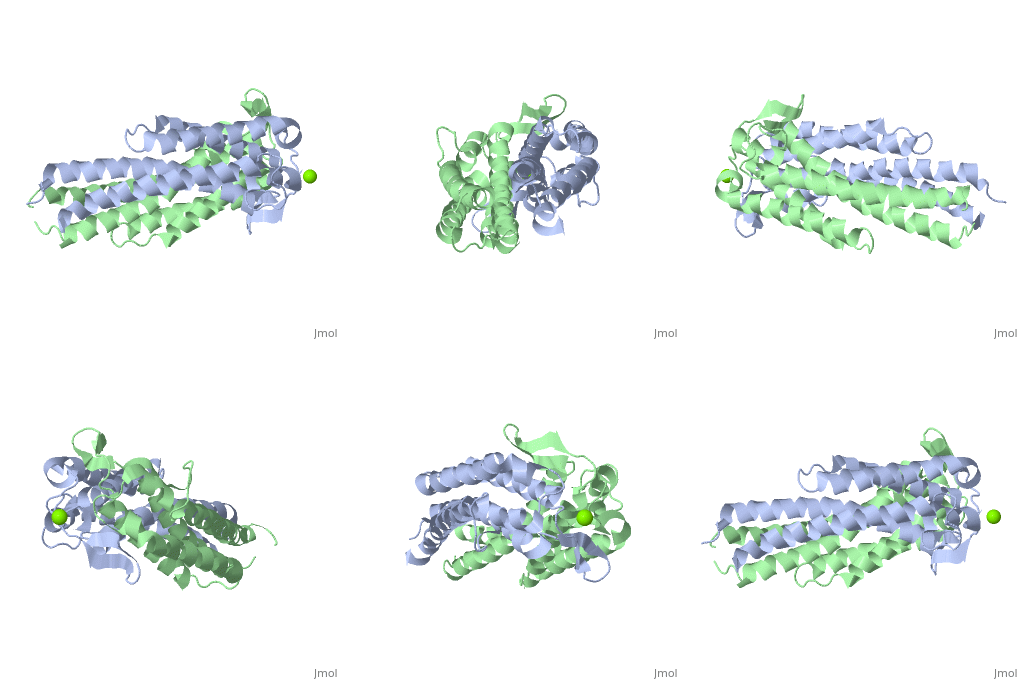
This is the which we came out after reading the primary literature.
Introduction
Lyme disease is a typical epidemic in northeastern region. The patients begin with skin lesions which later develop into more severe neurological and cardiac symptoms. Human Lyme disease is the most prevalent tick-borne disease which is caused by Borrelia burgdoferi,a spirochete that is identified in Ixodes scapulars. When the tick migrates from guts to salivary gland during feeding, the outer surface protein C is
