This old version of Proteopedia is provided for student assignments while the new version is undergoing repairs. Content and edits done in this old version of Proteopedia after March 1, 2026 will eventually be lost when it is retired in about June of 2026.
Apply for new accounts at the new Proteopedia. Your logins will work in both the old and new versions.
G09SecL04Tpc2
From Proteopedia
(→Outer Surface Protein A (OspA)) |
|||
| Line 2: | Line 2: | ||
<Structure load='1fj1' size='500' frame='true' align='right' caption='Outer Surface Protein A Fab LA-2 Complex' scene='Insert optional scene name here' /> | <Structure load='1fj1' size='500' frame='true' align='right' caption='Outer Surface Protein A Fab LA-2 Complex' scene='Insert optional scene name here' /> | ||
| - | Outer surface protein A (OspA) is a major lipoprotein on the borrelia burgdorferi spirochete which is a causative agent of Lyme Disease. The three loops in the C-terminus define the OspA antigen-antibody complex. The interaction between the loops and the LA-2 (antibody) forms the basis for OspA vaccination. Along with other surface proteins, OspA has many important functions such as late stage neurological disorders that are associated with Lyme Disease. | + | Outer surface protein A (OspA) is a major lipoprotein[http://en.wikipedia.org/wiki/Lipoprotein]on the borrelia burgdorferi spirochete which is a causative agent of Lyme Disease. The three loops in the C-terminus define the OspA antigen-antibody complex. The interaction between the loops and the LA-2 (antibody) forms the basis for OspA vaccination. Along with other surface proteins, OspA has many important functions such as late stage neurological disorders that are associated with Lyme Disease. |
== Introduction to Lyme Disease == | == Introduction to Lyme Disease == | ||
== Structure == | == Structure == | ||
Revision as of 03:32, 16 August 2012
Outer Surface Protein A (OspA)
|
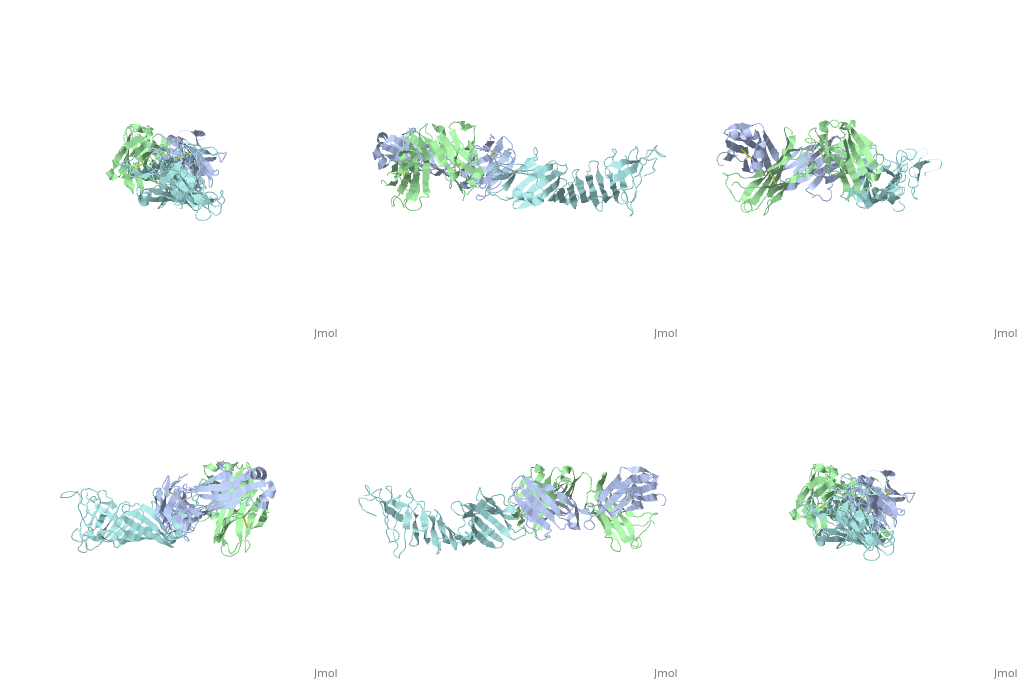
Outer surface protein A (OspA) is a major lipoprotein[1]on the borrelia burgdorferi spirochete which is a causative agent of Lyme Disease. The three loops in the C-terminus define the OspA antigen-antibody complex. The interaction between the loops and the LA-2 (antibody) forms the basis for OspA vaccination. Along with other surface proteins, OspA has many important functions such as late stage neurological disorders that are associated with Lyme Disease.
