We apologize for Proteopedia being slow to respond. For the past two years, a new implementation of Proteopedia has been being built. Soon, it will replace this 18-year old system. All existing content will be moved to the new system at a date that will be announced here.

Main Page

From Proteopedia

(Difference between revisions)
Jump to: navigation, search
Line 1: Line 1:
<table id="tableColumnsMainPage" style="width:100%;border:2px solid #ddd;border-collapse: collapse;table-layout: fixed; ">
 +
 +
<tr><td colspan='4' style="background:#F5F5FC;border:1px solid #ddd;">
<div style="top:+0.2em; font-size:1.2em; padding:5px 5px 5px 10px; float:right;">'''''ISSN 2310-6301'''''</div>
Line 6: Line 8:
<b>As life is more than 2D</b>, Proteopedia helps to bridge the gap between 3D structure & function of biomacromolecules
</span>
</span>
 +
<tr style="font-size: 1.0em; text-align: center;">
 +
Often it is difficult to utilize the wealth of information found in 3D biomacromolecular structures. Proteopedia's goal is to present structure/function information on these molecules in a user-friendly manner to a broad scientific audience.
 +
</tr>

Revision as of 11:17, 21 October 2018

Often it is difficult to utilize the wealth of information found in 3D biomacromolecular structures. Proteopedia's goal is to present structure/function information on these molecules in a user-friendly manner to a broad scientific audience. </td></tr>
ISSN 2310-6301

As life is more than 2D, Proteopedia helps to bridge the gap between 3D structure & function of biomacromolecules

Selected Pages Art on Science Journals Education
About this image
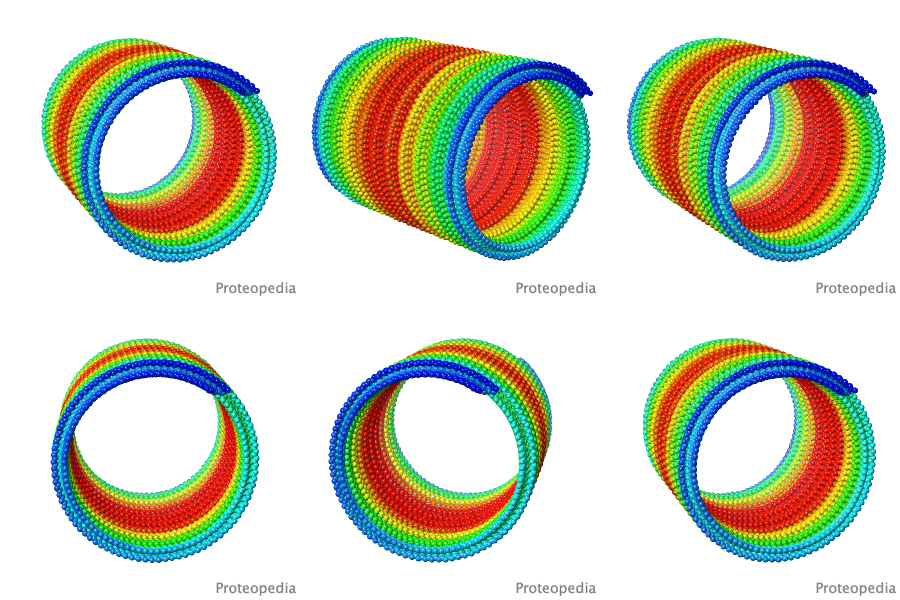
Coronavirus COVID-19

A novel coronavirus was found to be the cause of a respiratory illness first detected in Wuhan, China in 2019. 3D structural studies are aiding scientists to understand how the coronavirus infects humans and helping to find new ways to treat the viral spread (video by Fusion Animation).

>>> Visit this page >>>

About this image
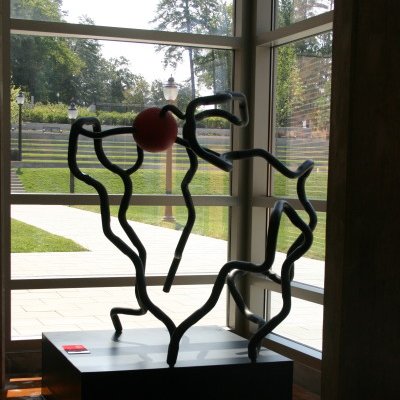
Molecular Sculpture

by Eric Martz
A historical review on sculptures and physical models of macromolecules.

>>> Visit this page >>>

About this image
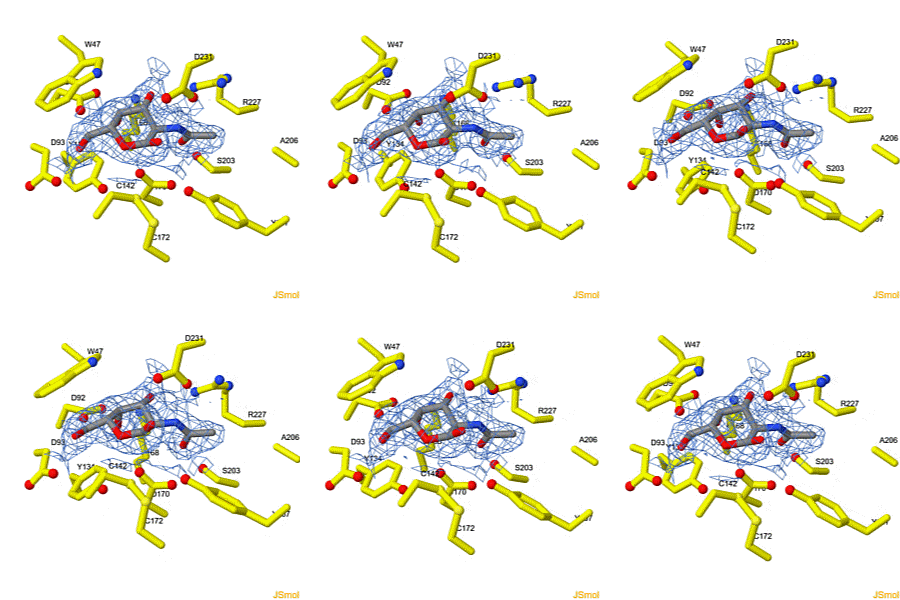
Interconversion of the specificities of human lysosomal enzymes associated with Fabry and Schindler diseases.

IB Tomasic, MC Metcalf, AI Guce, NE Clark, SC Garman. J. Biol. Chem. 2010 doi: 10.1074/jbc.M110.118588
The human lysosomal enzymes α-galactosidase and α-N-acetylgalactosaminidase share 46% amino acid sequence identity and have similar folds. Using a rational protein engineering approach, we interconverted the enzymatic specificity of α-GAL and α-NAGAL. The engineered α-GAL retains the antigenicity but has acquired the enzymatic specificity of α-NAGAL. Conversely, the engineered α-NAGAL retains the antigenicity but has acquired the enzymatic specificity of the α-GAL enzyme. Comparison of the crystal structures of the designed enzyme to the wild-type enzymes shows that active sites superimpose well, indicating success of the rational design. The designed enzymes might be useful as non-immunogenic alternatives in enzyme replacement therapy for treatment of lysosomal storage disorders such as Fabry disease.

>>> Visit this I3DC complement >>>

About this image
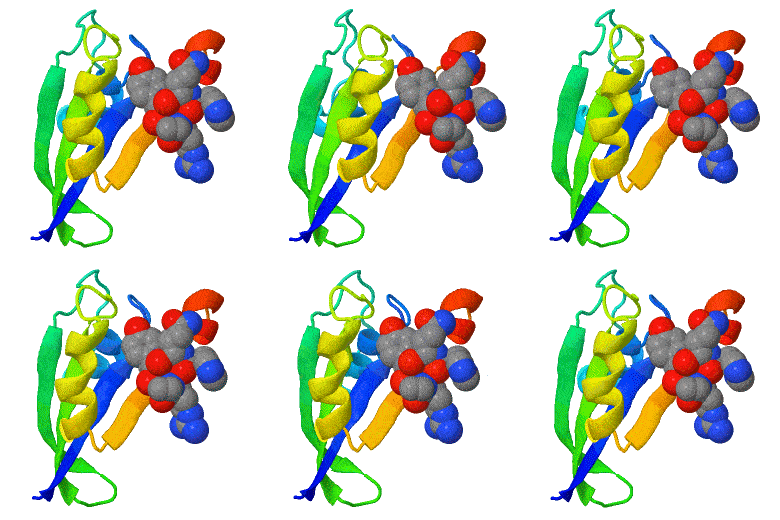
Introduction to protein structure

This tutorial illustrates some basic properties of protein structure:

  • Levels of protein structure.
  • Ways of representing protein structure.
  • Secondary structures.
  • Motifs in proteins.
  • Domains.
  • Tertiary structure.
  • Quaternary structure.

>>> Visit this page >>>

How to add content to Proteopedia

Video Guides

Who knows ...

List of Art on Science pages

About Interactive 3D Complements - I3DCs

List of I3DCs

How to get an I3DC for your paper

Teaching strategies using Proteopedia

Examples of pages for teaching

How to add content to Proteopedia

About Contact Table of Contents Structure Index Help

Proteopedia Page Contributors and Editors (what is this?)

Joel L. Sussman, Jaime Prilusky

Personal tools