This old version of Proteopedia is provided for student assignments while the new version is undergoing repairs. Content and edits done in this old version of Proteopedia after March 1, 2026 will eventually be lost when it is retired in about June of 2026.


Apply for new accounts at the new Proteopedia. Your logins will work in both the old and new versions.


Main Page

From Proteopedia

(Difference between revisions)
Jump to: navigation, search
Line 8: Line 8:
<span style="border:none; margin:0; padding:0.3em; color:#000; font-style: italic; font-size: 1.1em;max-width:80%;display:block;">
-
Often it is difficult to utilize the wealth of information found in 3D biomacromolecular structures. Proteopedia's goal is to present structure/function information on these molecules in a user-friendly manner to a broad scientific audience.
+
Proteopedia's goal is to present structure/function information on 3D biomacromolecules in a user-friendly manner to a broad scientific audience.
</span>
</span>

Revision as of 09:00, 20 January 2019

ISSN 2310-6301

As life is more than 2D, Proteopedia helps to bridge the gap between 3D structure & function of biomacromolecules

Proteopedia's goal is to present structure/function information on 3D biomacromolecules in a user-friendly manner to a broad scientific audience.


Selected Pages Journals Education

Lifecycle of SARS-CoV-2

What happens if a SARS-CoV-2 coronavirus enters your lung? This molecular animation visualises how the virus particle can take over the host cell and turns it into a virus factory. Eventually, the host cell produces so many viral particles that it dies and releases numerous new virus particles. >>> Visit this page >>>

About this image
Structure of Anticancer Ruthenium Half-Sandwich Complex Bound to Glycogen Synthase Kinase 3ß

G Atilla-Gocumen, L Di Costanzo, E Meggers. J Biol Inorg Chem. 2010 doi: 10.1007/s00775-010-0699-x
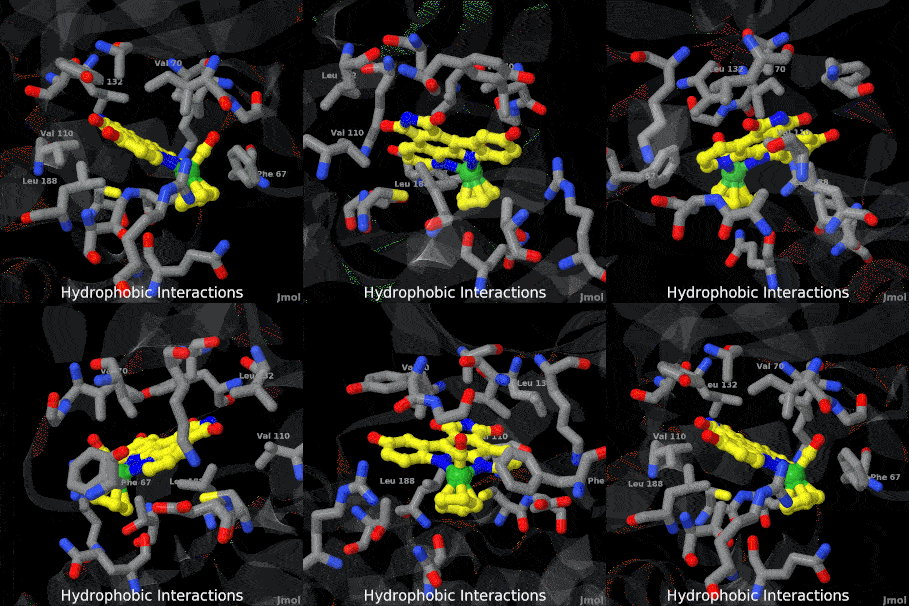
A crystal structure of an organometallic half-sandwich ruthenium complex bound to glycogen synthase kinase 3ß (GSK-3ß) reveals that the inhibitor binds to the ATP binding site via an induced fit mechanism utilizing several hydrogen bonds and hydrophobic interactions. Importantly, the metal is not involved in any direct interaction with the protein kinase but fulfills a purely structural role.

>>> Visit this I3DC complement >>>

About this image
Tutorial: How do we get the oxygen we breathe

J Prilusky, E Hodis doi: 10.14576/431679.1869588
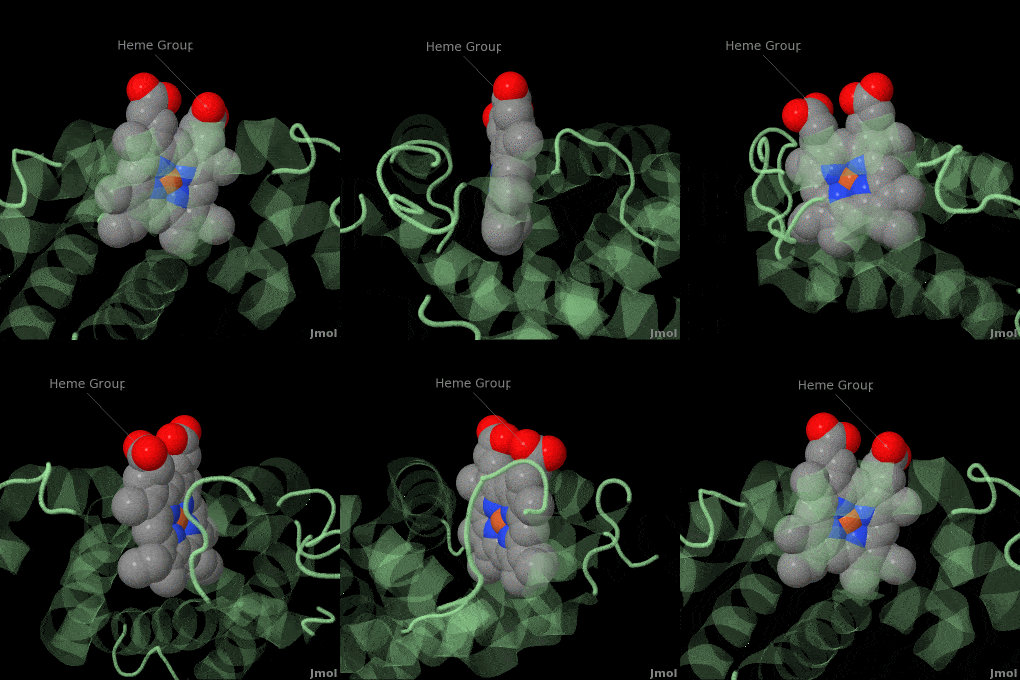
This tutorial is designed for high school and beginning college students. When we breathe oxygen from the air is taken up by blood in our lungs and soon delivered to each of the cells in our body through our circulatory system. Among other uses, our cells use oxygen as the final electron acceptor in a process called aerobic respiration – a process that converts the energy in food and nutrients into a form of energy that the cell can readily use (molecules of ATP, adenosine triphosphate).

>>> Visit this tutorial >>>

How to add content to Proteopedia

Video Guides

Who knows ...

About Interactive 3D Complements - I3DCs

List of I3DCs

How to get an I3DC for your paper

Teaching strategies using Proteopedia

Examples of pages for teaching

How to add content to Proteopedia

About Contact Table of Contents Structure Index Help

Proteopedia Page Contributors and Editors (what is this?)

Joel L. Sussman, Jaime Prilusky

Personal tools