This old version of Proteopedia is provided for student assignments while the new version is undergoing repairs. Content and edits done in this old version of Proteopedia after March 1, 2026 will eventually be lost when it is retired in about June of 2026.
Apply for new accounts at the new Proteopedia. Your logins will work in both the old and new versions.
Bromelain
From Proteopedia
(Difference between revisions)
| Line 21: | Line 21: | ||
==Temperature stability== | ==Temperature stability== | ||
At the optimum temperature, the enzyme acts the fastest, but (at least the fruit variant) is destroyed within few minutes. After an hour at 50 °C (122 °F), 83% of the enzyme remains, while at 40 °C (104 °F), practically 100% remains. As a result of this, the optimum temperature for maximum cumulated activity over time is 35-45 °C. At room temperature, the enzyme can survive at least a week even under multiple freeze-thaw cycles. | At the optimum temperature, the enzyme acts the fastest, but (at least the fruit variant) is destroyed within few minutes. After an hour at 50 °C (122 °F), 83% of the enzyme remains, while at 40 °C (104 °F), practically 100% remains. As a result of this, the optimum temperature for maximum cumulated activity over time is 35-45 °C. At room temperature, the enzyme can survive at least a week even under multiple freeze-thaw cycles. | ||
| + | |||
| + | ==How it works== | ||
| + | Bromelain is a cysteine protease. The <scene name='60/609840/Active_site/1'>active site</scene> contains a cysteine residue. A neighboring histidine increases the ionization of the cysteine, making it a better nucleophile. | ||
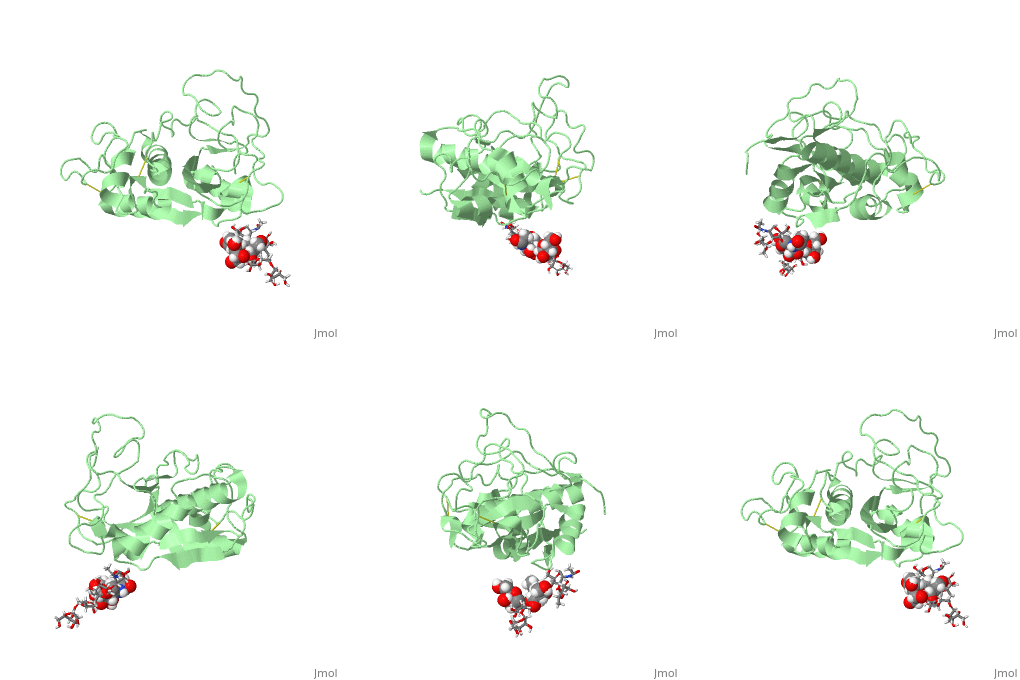
== 3D Structures of bromelain == | == 3D Structures of bromelain == | ||
Current revision
| |||||||||||