This old version of Proteopedia is provided for student assignments while the new version is undergoing repairs. Content and edits done in this old version of Proteopedia after March 1, 2026 will eventually be lost when it is retired in about June of 2026.
Apply for new accounts at the new Proteopedia. Your logins will work in both the old and new versions.
Gluconeogenesis
From Proteopedia
(Difference between revisions)
| Line 25: | Line 25: | ||
6) Aspartate, asparagine => <scene name='43/430893/Cv/3'>Oxaloacetate</scene> => | 6) Aspartate, asparagine => <scene name='43/430893/Cv/3'>Oxaloacetate</scene> => | ||
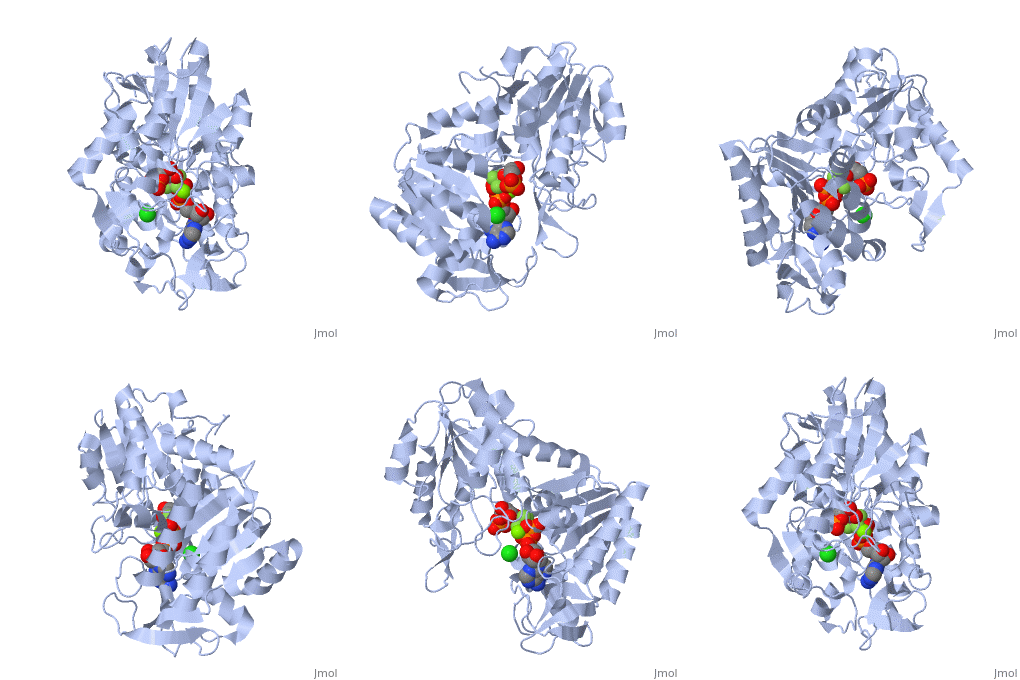
| - | [by Phosphoenolpyruvate carboxykinase] <scene name='39/392339/Cv1/8'>phosphoenolpyruvate</scene> => ... => <scene name='39/392339/Cv/3'>Glucose</scene> | + | [by [[Phosphoenolpyruvate carboxykinase]]] <scene name='39/392339/Cv1/8'>phosphoenolpyruvate</scene> (PEP) => ... => <scene name='39/392339/Cv/3'>Glucose</scene> |
| + | he location of the enzyme that links these two parts of gluconeogenesis by converting oxaloacetate to PEP – [[PEP carboxykinase]] (PEPCK) – is variable by species: it can be found entirely within the mitochondria, entirely within the cytosol, or dispersed evenly between the two, as it is in humans. | ||
</StructureSection> | </StructureSection> | ||
== References == | == References == | ||
<references/> | <references/> | ||
Revision as of 12:43, 27 November 2022
| |||||||||||