This old version of Proteopedia is provided for student assignments while the new version is undergoing repairs. Content and edits done in this old version of Proteopedia after March 1, 2026 will eventually be lost when it is retired in about June of 2026.
Apply for new accounts at the new Proteopedia. Your logins will work in both the old and new versions.
Glycogenesis
From Proteopedia
(Difference between revisions)
| Line 19: | Line 19: | ||
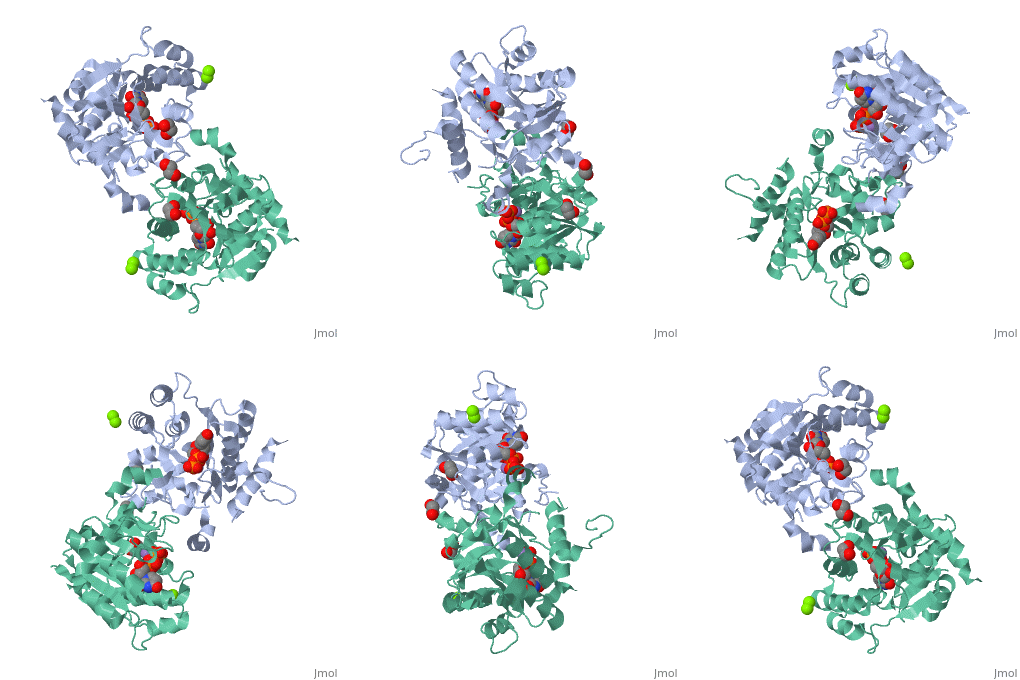
The enzyme [[glycogenin]] is needed to create initial short glycogen chains, which are then lengthened and branched by the other enzymes of glycogenesis. Glycogenin, a homodimer, has a tyrosine residue on each subunit that serves as the anchor for the reducing end of glycogen. Initially, about seven UDP-glucose molecules are added to each tyrosine residue by glycogenin, forming α(1→4) bonds. | The enzyme [[glycogenin]] is needed to create initial short glycogen chains, which are then lengthened and branched by the other enzymes of glycogenesis. Glycogenin, a homodimer, has a tyrosine residue on each subunit that serves as the anchor for the reducing end of glycogen. Initially, about seven UDP-glucose molecules are added to each tyrosine residue by glycogenin, forming α(1→4) bonds. | ||
| + | |||
| + | '''Step 5''' | ||
| + | |||
| + | Once a chain of seven glucose monomers is formed, glycogen synthase binds to the growing glycogen chain and adds UDP-glucose to the 4-hydroxyl group of the glucosyl residue on the non-reducing end of the glycogen chain, forming more α(1→4) bonds in the process. | ||
</StructureSection> | </StructureSection> | ||
== References == | == References == | ||
<references/> | <references/> | ||
Revision as of 12:09, 18 December 2022
| |||||||||||