This old version of Proteopedia is provided for student assignments while the new version is undergoing repairs. Content and edits done in this old version of Proteopedia after March 1, 2026 will eventually be lost when it is retired in about June of 2026.
Apply for new accounts at the new Proteopedia. Your logins will work in both the old and new versions.
Apply for new accounts at the new Proteopedia. Your logins will work in both the old and new versions.
Timothy Locksmith sandbox Heat Sock Factor
From Proteopedia
(Difference between revisions)
| Line 2: | Line 2: | ||
== Introduction == | == Introduction == | ||
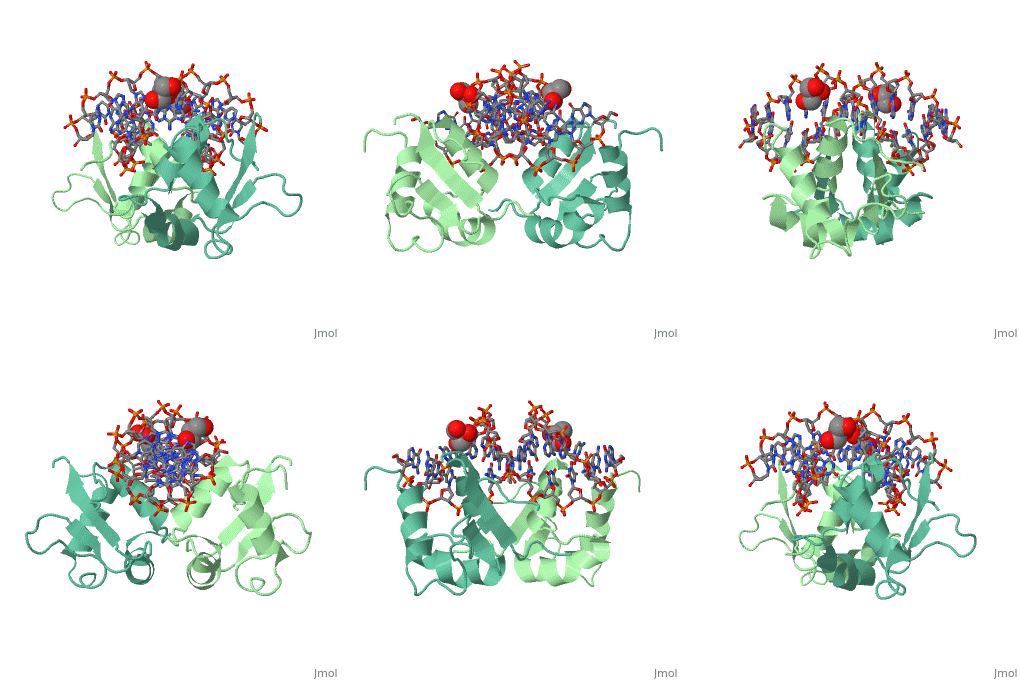
| - | Heat Shock Factor (HSF) is primarily used for the transcription of Heat shock proteins, which are used for the survival of a cell under high temperature stress situations.<ref>PMCID: | + | Heat Shock Factor (HSF) is primarily used for the transcription of Heat shock proteins, which are used for the survival of a cell under high temperature stress situations.<ref>PMCID: 24800749</ref> Its structure is highly conserved through species from flies to humans, and even all the way to yeast, which suggests that its existence is very important for the survival of organisms. Studies delving into the uses of HSF have proven promising in Cancer research fields. In some instances when cancer cells had their HSF inhibited underwent cell death instead of proliferation, thus ceasing the spread of the cancer and reducing its size. It is hypothesized that HSF is an integral part of cancer cell survival. |
== Regulation == | == Regulation == | ||
Revision as of 18:07, 28 October 2015
| |||||||||||