This old version of Proteopedia is provided for student assignments while the new version is undergoing repairs. Content and edits done in this old version of Proteopedia after March 1, 2026 will eventually be lost when it is retired in about June of 2026.
Apply for new accounts at the new Proteopedia. Your logins will work in both the old and new versions.
Cancidas
From Proteopedia
(Difference between revisions)
| Line 1: | Line 1: | ||
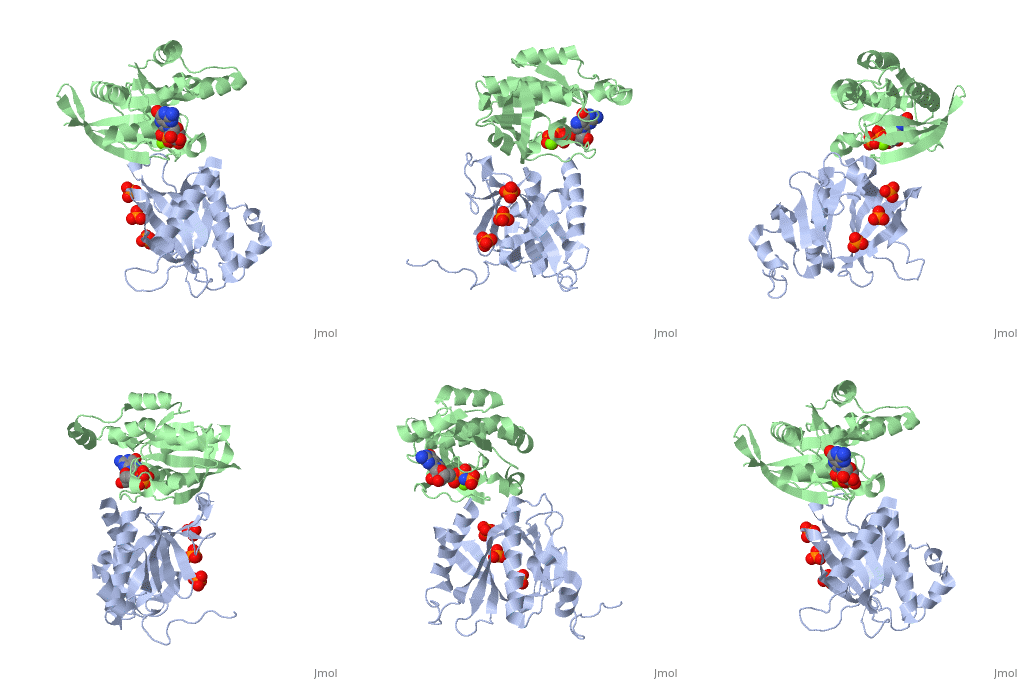
| - | <StructureSection load='3A58' size='340' side='right' caption='Rho1 p, a precursor of beta glucan synthase' scene=''> | + | <StructureSection load='3A58' size='340' side='right' caption='Yeast Rho1 p, a precursor of beta glucan synthase (green) complex with SEC3P (grey), cancidas, GNP, phosphate and Mg+2 ion (green (PDB code [[3a58]])' scene=''> |
==Function== | ==Function== | ||
Caspofungin is a cyclic peptide, isolated from the fermentation products of the fungus ''G. lozoyensis'', that inhibits cell wall synthesis with inhibition of 1,3-β-glucan synthase. Inhibiting 1,3-β-glucan synthase leads to weakening of the cell wall and cell content leakage until death results. Caspofungin is unlike azole antifungal drugs as it triggers apoptosis of fungi and is not simply fungistatic. Many fungistatic drugs target the cell membrane rather than the cell wall or inhibit DNA and protein synthesis <ref>DOI 10.1159/000447802</ref>. Members of the ''Aspergillus'' and ''Candida'' genera are most susceptible to the drug showing extreme susceptibility in hyphae extremities, sites of cell wall synthesis. Other pathogenic fungi that were previously believed to be saprophytic have also shown susceptibility <ref> https://www.merck.com/product/usa/pi_circulars/c/cancidas/cancidas_pi.pdf</ref>. | Caspofungin is a cyclic peptide, isolated from the fermentation products of the fungus ''G. lozoyensis'', that inhibits cell wall synthesis with inhibition of 1,3-β-glucan synthase. Inhibiting 1,3-β-glucan synthase leads to weakening of the cell wall and cell content leakage until death results. Caspofungin is unlike azole antifungal drugs as it triggers apoptosis of fungi and is not simply fungistatic. Many fungistatic drugs target the cell membrane rather than the cell wall or inhibit DNA and protein synthesis <ref>DOI 10.1159/000447802</ref>. Members of the ''Aspergillus'' and ''Candida'' genera are most susceptible to the drug showing extreme susceptibility in hyphae extremities, sites of cell wall synthesis. Other pathogenic fungi that were previously believed to be saprophytic have also shown susceptibility <ref> https://www.merck.com/product/usa/pi_circulars/c/cancidas/cancidas_pi.pdf</ref>. | ||
Revision as of 09:47, 4 January 2018
| |||||||||||