We apologize for Proteopedia being slow to respond. For the past two years, a new implementation of Proteopedia has been being built. Soon, it will replace this 18-year old system. All existing content will be moved to the new system at a date that will be announced here.

User:Jaime.Prilusky/Test/Sortable

From Proteopedia

(Difference between revisions)
Jump to: navigation, search
Line 1: Line 1:
-
<table style="width:100%;border:2px solid #ddd;border-collapse: collapse;table-layout: fixed; ">
+
<table id="tableColumnsMainPage" style="width:100%;border:2px solid #ddd;border-collapse: collapse;table-layout: fixed; ">
<tr><td colspan='4' style="background:#F5F5FC;border:1px solid #ddd;">
<span style="font-size:2.0em; border:none; margin:0; padding:0.3em; color:#000; font-weight: bold;">Welcome to Proteopedia</span><br>

Revision as of 07:23, 18 October 2018

Welcome to Proteopedia
ISSN 2310-6301 The free, collaborative 3D-encyclopedia of proteins & other molecules

Journals Art on Science Selected Pages Education
About this image
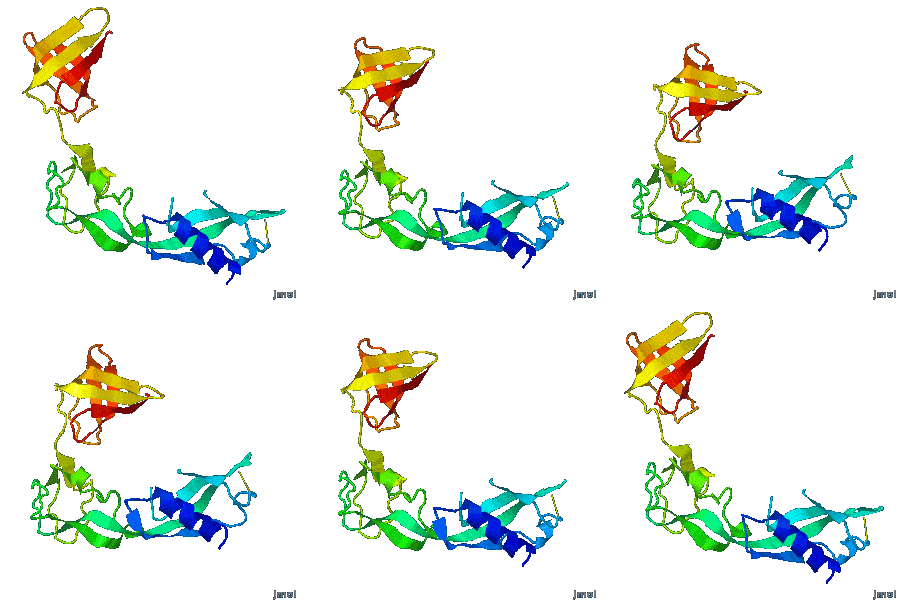
Structural flexibility of the periplasmic protein, FlgA, regulates flagellar P-ring assembly in Salmonella enterica.

H Matsunami, YH Yoon, VA Meshcheryakov, K Namba, FA Samatey. Scientific Reports 2016 doi: 10.1038/srep27399
A periplasmic flagellar chaperone protein, FlgA, is required for P-ring assembly in bacterial flagella of taxa such as Salmonella enterica or Escherichia coli. Here we present the open and closed crystal structures of FlgA from Salmonella enterica serovar Typhimurium, grown under different crystallization conditions. An intramolecular disulfide cross-linked form of FlgA caused a dominant negative effect on motility of the wild-type strain.

>>> Visit this I3DC complement >>>

About this image
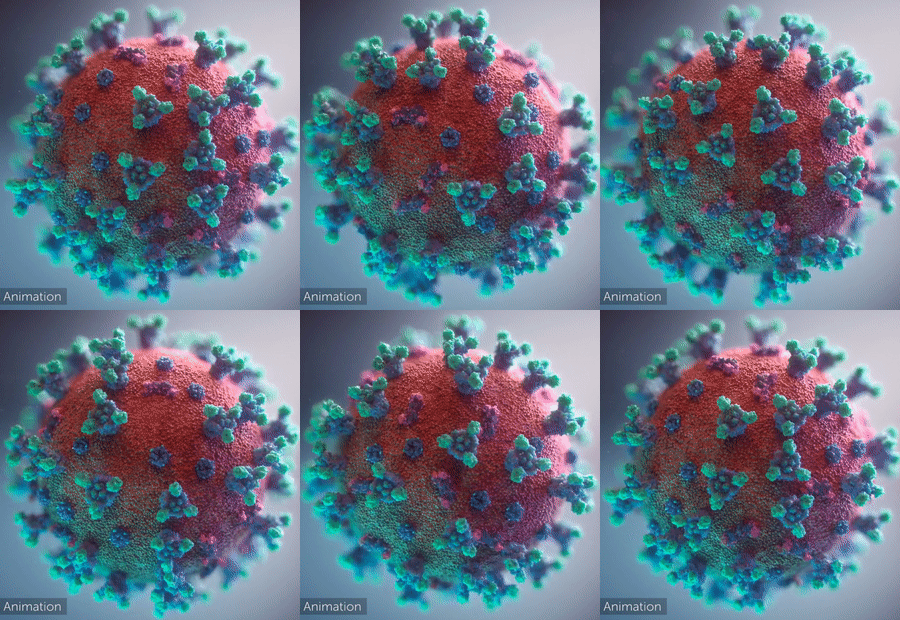
Opening a Gate to Human Health

by Alice Clark (PDBe)
In the 1970s, an exciting discovery of a family of medicines was made by the Japanese scientist Satoshi Ōmura. One of these molecules, ivermectin, is shown in this artwork bound in the ligand binding pocket of the Farnesoid X receptor, a protein which helps regulate cholesterol in humans. This structure showed that ivermectin induced transcriptional activity of FXR and could be used to regulate metabolism.

>>> Visit this page >>>

About this image
Green Fluorescent Protein

by Eran Hodis
Green fluorescent protein (GFP) is a bioluminescent polypeptide isolated from the jellyfish Aequorea victoria. GFP converts the blue chemiluminescence of aequorin into green fluorescent light. In the laboratory, GFP can be incorporated into a variety of biological systems in order to function as a marker protein. Since its discovery in 1962, GFP has become a significant contributor to the research of monitoring gene expression, localization, mobility, traffic, or interactions between various membrane and cytoplasmic proteins.

>>> Visit this page >>>

About this image
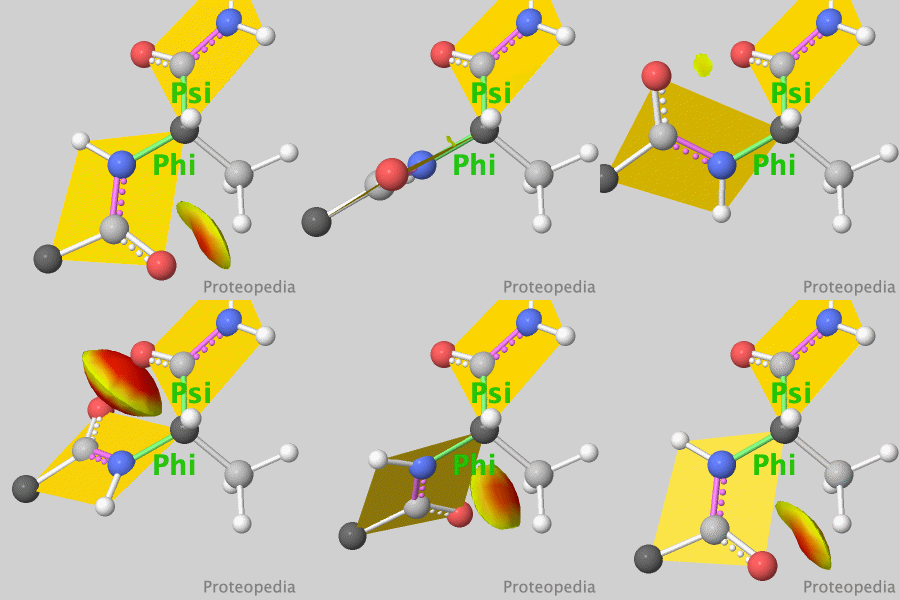
Tutorial: Ramachandran Plot Inspection

by Angel Herráez
Side-by-side display of dihedral angles in a 3D model of a tripeptide and its Ramachandran plot. Users can interact with any of them and the other will change accordingly. Includes animated rotations with display of clashes.

>>> Visit this page >>>

Proteopedia Page Contributors and Editors (what is this?)

Jaime Prilusky

Personal tools