This old version of Proteopedia is provided for student assignments while the new version is undergoing repairs. Content and edits done in this old version of Proteopedia after March 1, 2026 will eventually be lost when it is retired in about June of 2026.
Apply for new accounts at the new Proteopedia. Your logins will work in both the old and new versions.
Sandbox 167
From Proteopedia
| Line 1: | Line 1: | ||
| - | < | + | '''Lingulodinium polyedrum dinoflagellate luciferase''' |
| - | + | <applet load='1vpr' size='300' frame='true' align='right' caption='Insert caption here' /> | |
| + | Lingulodinium polyedrum, a marine dinoflagellate often responsible for red tide, posesses a unique-domain luciferase enyzme. When mechanically stimulated, the organism uses this enzyme to produce a blue light, likely for use in quorum sensing. | ||
| - | + | == Introduction == | |
| - | + | ||
| + | In ''L. polyedrum'', the luciferase enzyme is an [x] amino acid, [x] domain, polypeptide. | ||
Revision as of 04:43, 5 March 2010
Lingulodinium polyedrum dinoflagellate luciferase
|
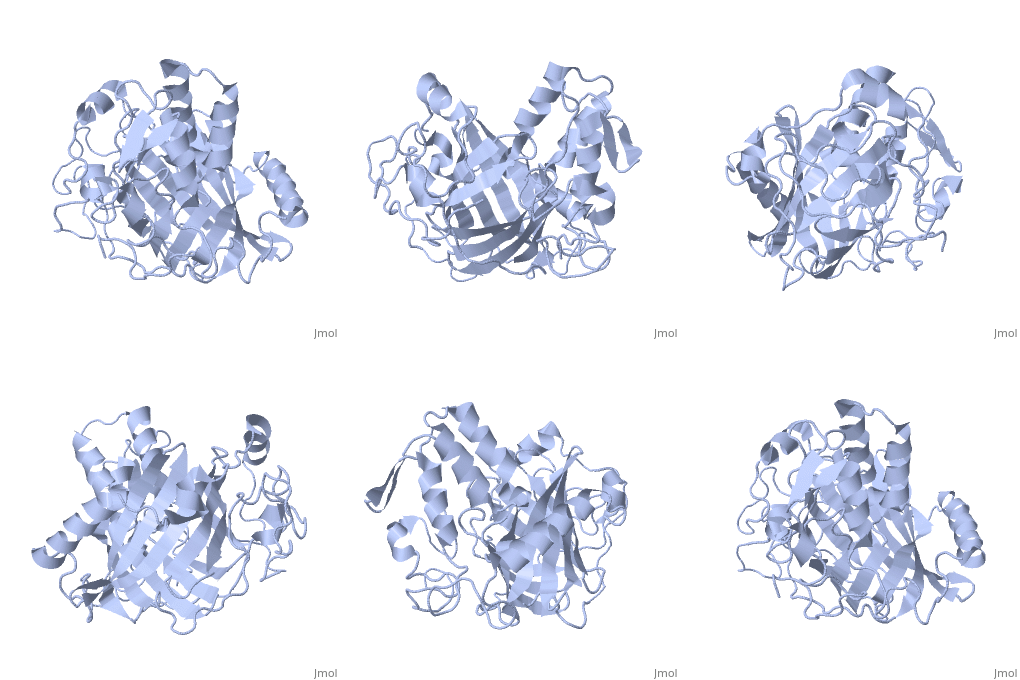
Lingulodinium polyedrum, a marine dinoflagellate often responsible for red tide, posesses a unique-domain luciferase enyzme. When mechanically stimulated, the organism uses this enzyme to produce a blue light, likely for use in quorum sensing.
Introduction
In L. polyedrum, the luciferase enzyme is an [x] amino acid, [x] domain, polypeptide.
