This old version of Proteopedia is provided for student assignments while the new version is undergoing repairs. Content and edits done in this old version of Proteopedia after March 1, 2026 will eventually be lost when it is retired in about June of 2026.
Apply for new accounts at the new Proteopedia. Your logins will work in both the old and new versions.
MoRFs
From Proteopedia
(Difference between revisions)
(→Your Heading Here (maybe something like 'Structure')) |
(→Molecular Recognition Features) |
||
| Line 1: | Line 1: | ||
| - | == Molecular Recognition Features == | + | <Structure load='Insert PDB code or filename here' size='500' frame='true' align='right' caption='Insert caption here' scene='Insert optional scene name here' />== Molecular Recognition Features == |
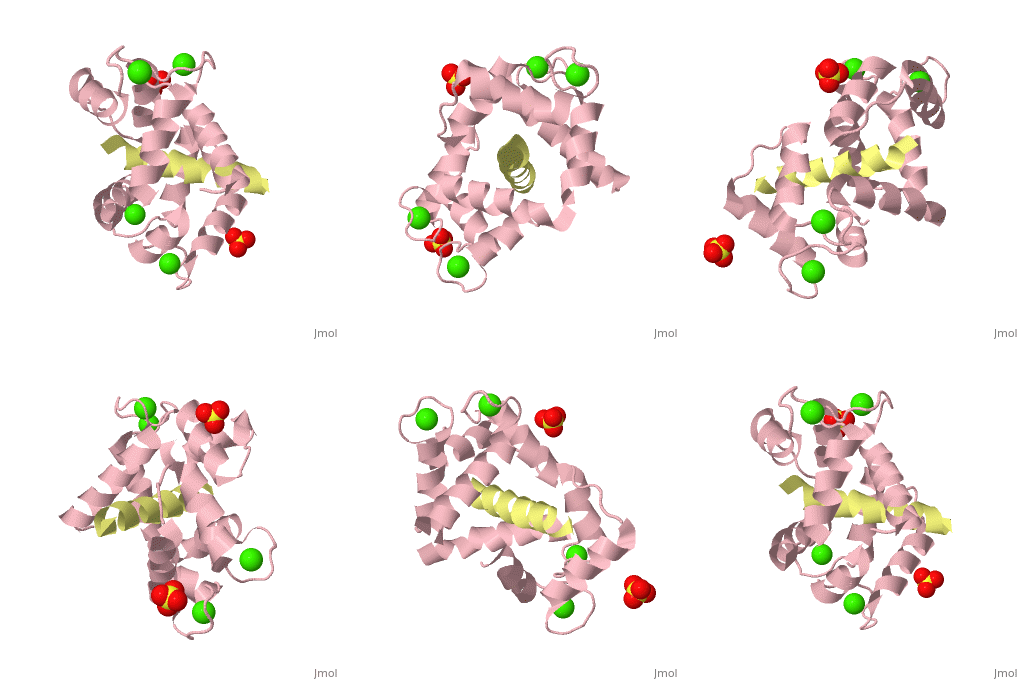
| - | <StructureSection load=' | + | <StructureSection load='3BXK' size='350' side='right' caption='MoRF: Brain calcium channel I AC:O00555 PARTNER: Calmodulin (PDB entry [[3BXK]])' scene=''> |
MoRFs (Molecular Recognition Features) or MoREs (Molecular Recognition Elements) are small Intrinsically Disordered Regions that undergo a disorder to order transition upon binding with other molecules. | MoRFs (Molecular Recognition Features) or MoREs (Molecular Recognition Elements) are small Intrinsically Disordered Regions that undergo a disorder to order transition upon binding with other molecules. | ||
</StructureSection> | </StructureSection> | ||
Revision as of 11:28, 26 November 2012
|
| |||||||||||