This old version of Proteopedia is provided for student assignments while the new version is undergoing repairs. Content and edits done in this old version of Proteopedia after March 1, 2026 will eventually be lost when it is retired in about June of 2026.
Apply for new accounts at the new Proteopedia. Your logins will work in both the old and new versions.
User:Noam Gonen/Avidin
From Proteopedia
(Difference between revisions)
| Line 1: | Line 1: | ||
== INTRODUCTION == | == INTRODUCTION == | ||
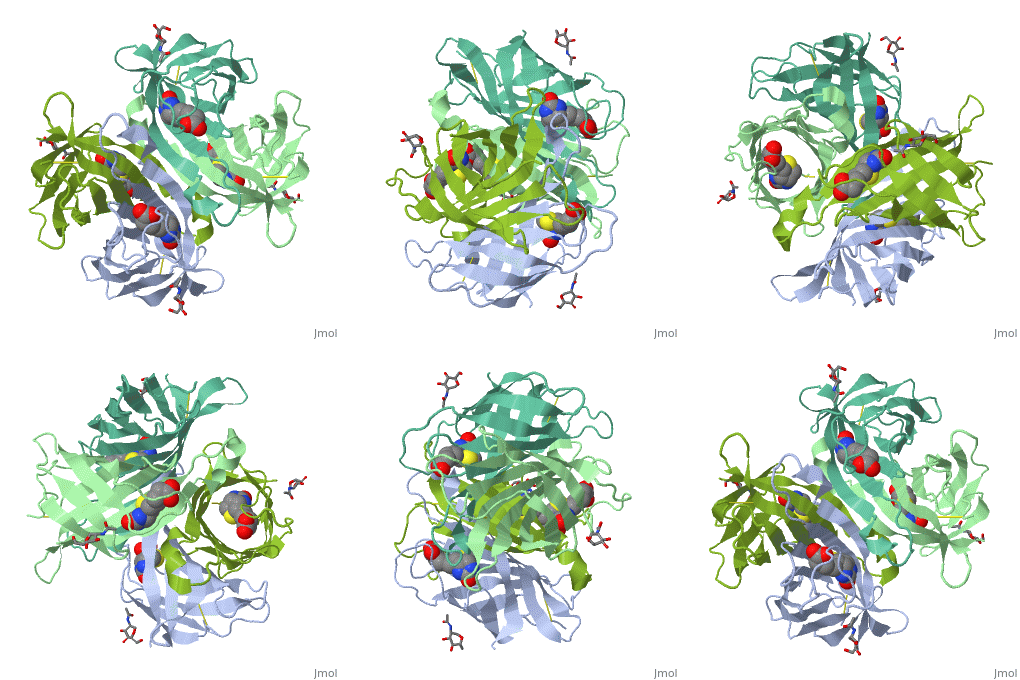
| - | Avidin is a tetrameric or dimeric[1] biotin-binding protein produced in the oviducts of birds, reptiles and amphibians and deposited in the whites of their eggs. | + | Avidin is a tetrameric or dimeric[1] biotin-binding protein produced in the oviducts of birds, reptiles and amphibians and deposited in the whites of their eggs. |
<StructureSection load='2avi' size='340' side='right' caption='Caption for this structure' scene=''> | <StructureSection load='2avi' size='340' side='right' caption='Caption for this structure' scene=''> | ||
| - | == | + | == Structure == |
| - | + | The tetrameric protein contains four identical subunits (homotetramer), each of which can bind to biotin (Vitamin B7, vitamin H) with a high degree of affinity and specificity. The dissociation constant of avidin is measured to be KD ≈ 10−15 M, making it one of the strongest known non-covalent bonds.[2] | |
== Disease == | == Disease == | ||
Revision as of 15:28, 17 January 2015
INTRODUCTION
Avidin is a tetrameric or dimeric[1] biotin-binding protein produced in the oviducts of birds, reptiles and amphibians and deposited in the whites of their eggs.
| |||||||||||