This old version of Proteopedia is provided for student assignments while the new version is undergoing repairs. Content and edits done in this old version of Proteopedia after March 1, 2026 will eventually be lost when it is retired in about June of 2026.
Apply for new accounts at the new Proteopedia. Your logins will work in both the old and new versions.
Lysin
From Proteopedia
(Difference between revisions)
| Line 1: | Line 1: | ||
| - | + | ||
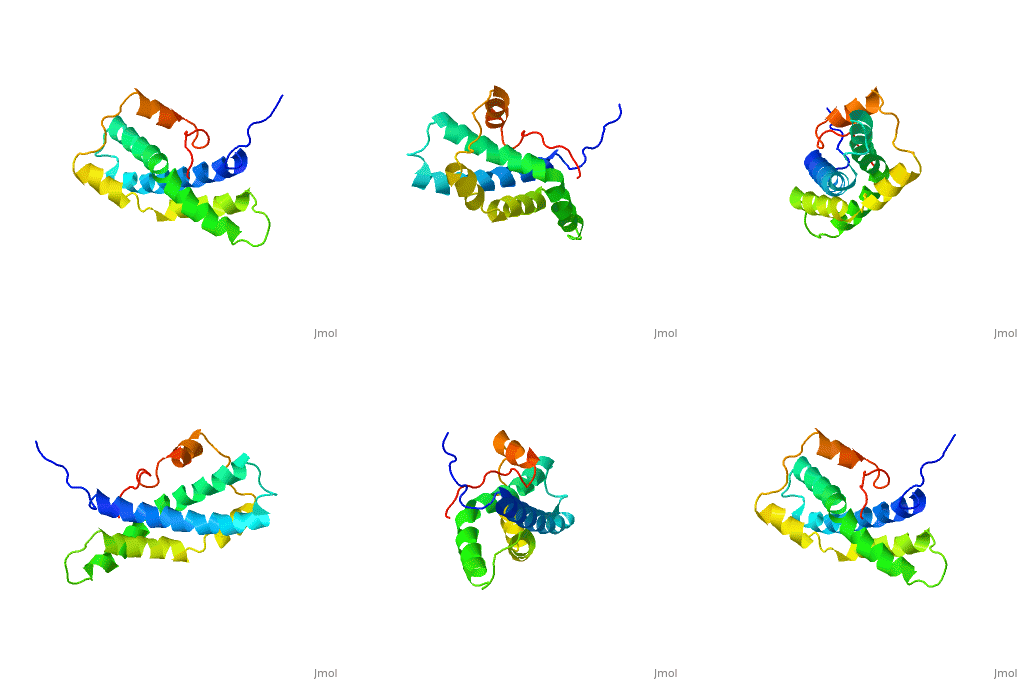
<StructureSection load='1lis' size='340' side='right' caption='Abalone lysin (PDB code [[1lis]])' scene='60/607850/Lysin_fertilization_protein/1'> | <StructureSection load='1lis' size='340' side='right' caption='Abalone lysin (PDB code [[1lis]])' scene='60/607850/Lysin_fertilization_protein/1'> | ||
| - | |||
| - | |||
| - | |||
== Function == | == Function == | ||
| - | Egg Lysin, a protein from abalone sperm, creates a hole in the envelope of the egg, permitting the sperm to pass through the envelope and fuse with the egg. | ||
| - | |||
| - | + | '''Lysin''' (Lys) is a protein which cleaves cell walls. Egg Lysin, a protein from abalone sperm, creates a hole in the envelope of the egg, permitting the sperm to pass through the envelope and fuse with the egg. | |
== Structural highlights == | == Structural highlights == | ||
| - | The structure of lysin, refined at 1.9 angstroms resolution, reveals an alpha-helical, amphipathic molecule<scene name='60/607850/Alpha_helixes/1'>To see alpha helixes press here</scene>. you can see the alpha helixes in pink. <scene name='60/607850/Surface/1'>the surface of the protein</scene> exhibits three features: two tracks of basic residues that span the length of the molecule, a solvent-exposed cluster of <scene name='60/607850/Aromatic_and_aliphatic/1'>aromatic and aliphatic amino acids</scene>,(in green) and an extended amino-terminal hypervariable domain that is species-specific. The structure suggests possible mechanisms of action. | + | The structure of lysin, refined at 1.9 angstroms resolution, reveals an alpha-helical, amphipathic molecule<scene name='60/607850/Alpha_helixes/1'>To see alpha helixes press here</scene>. you can see the alpha helixes in pink. <scene name='60/607850/Surface/1'>the surface of the protein</scene> exhibits three features: two tracks of basic residues that span the length of the molecule, a solvent-exposed cluster of <scene name='60/607850/Aromatic_and_aliphatic/1'>aromatic and aliphatic amino acids</scene>,(in green) and an extended amino-terminal hypervariable domain that is species-specific. The structure suggests possible mechanisms of action<ref>PMID:6266073</ref>. |
| Line 17: | Line 12: | ||
== References == | == References == | ||
<references/> | <references/> | ||
| - | The crystal structure of lysin, a fertilization protein. | ||
| - | Shaw A1, McRee DE, Vacquier VD, Stout CD. | ||
Revision as of 11:24, 31 January 2016
| |||||||||||
References
- ↑ Sumi T, Kishino Y. Histochemical and ultracytochemical detection of pyridoxal and pyridoxamine phosphate hydrolase in rat tissues. Tokushima J Exp Med. 1980 Dec;27(3-4):57-62. PMID:6266073
Proteopedia Page Contributors and Editors (what is this?)
Michal Harel, Carmit Ginesin, Alexander Berchansky, Joel L. Sussman, Jaime Prilusky
