Structure
Chlorothiazide is a semisynthetic chemical compound known chemically as 6-chloro-3,4-dihydro-2H-1,2,4-benzothiadiazine-7-sulfonamide 1,1-dioxide (Figure 1) (reference). Its chemical formula is C7H8ClN3O4S2 and its molecular weight is of 298Da. This chemical compound consists of an aromatic ring, benzothiadiazine, a sulfonamide group, and a chloride. It has a melting point of 272 degrees Celsius, a flash point of 302.7 degrees Celcius, a solubility of 60 mg/m in DMSO and less than 1 mg/ml in water, and appears a white crystalline powder(reference). The structure was determined by X-Ray diffraction and was measured at a resolution of 2.1 Angstroms (reference). through hydrogen bonding between the nitrogen 12 and serine 242B, nitrogen 1 and serines 108B and 108E, and oxygen 17 and glycine 219 E (Figure 2 & 3). Synthesis of chlorothiazide occurs through the reaction between 3 -chloroaniline, chlorosulfonic acid, and ammonia; and it is catalyzed by formic acid (Figure 4)(reference).
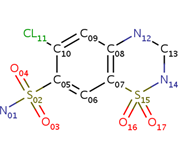
Figure 1. Molecular structure of chlorothiazide.
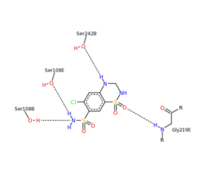
Figure 2. Stabilizing structure between glutamate receptor 2 and chlorothiazide.
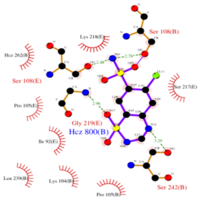
Figure 3. Stabilizing structure between glutamate receptor 2 and chlorothiazide.
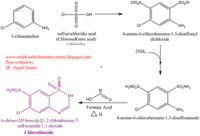
Figure 4. Synthesis of chlorothiazide.
Function and Mechanism
has diuretic and anti-hypertensive properties. Chlorothiazide acts as a diuretic, which means that it inhibits the reabsorption of chloride. This occurs at the distal tubules via the sodium-chloride co-transporter. The result of this is an increased excretion of sodium, chlorine, and water. Chlorothiazide also inhibits the sodium ion transport across renal tubular epithelium through binding to the thiazide-sensitive sodium-chloride transporter. The result of this is an increase in the excretion of potassium using the sodium-potassium exchange system. More specifically, chlorothiazide targets which mediates sodium and chloride reabsorption in the nephron segment to enhance renal sodium reabsorption. As for the anti-hypertensive properties of chlorothiazide the mechanism is not quite as known. It is thought that vasodilation is caused by the activation of calcium-activated potassium channels (KCa) and the inhibition of carbonic anhydrases. [1].
Chlorothiazide targets to perform the reversible hydration of carbon dioxide. is also targeted to perform the reversible hydration of carbon dioxide, regulate the fluid secretion of the anterior chamber of the eye and the intracellular pH in the duodenal upper villous epithelium durin proton-coupled peptide absorption, and stimulate the chloride-bicarbonate exchange activity of SLC26A6. Chlorothiazide targets to perform the reversible hydration of carbon dioxide, stimulate the sodium/bicarbonate transporter activity of SLC4A4, and remove acid overload from the retina and retina epithelium [1].
Medical Applications and Relevance
Hypertension
Although Diuril was introduced as an anti-diuretic drug, its antihypertensive properties were discovered when two researchers from Boston and Washington D.C administered the drug to patients suffering from congestive heart failure, edema and severe hypertension, and noted a dramatic reduction in high blood pressure. Unlike other hypotensive drugs, that lowers blood pressure equally in both hypertensive and normotensive patients, Diuril reduces the blood pressure of patients in the hypertensive state only. It therefore possesses considerable specificity. Diuril was also favored over other hypotensive drugs because of its ease of administration; it was delivered orally and required no hospitalization, nor testing to monitor immediate adverse effects. When combined with agents such as ganglionic blockers, reserpine, and hydralazine, its efficacy was synergistically increased while minimizing its respective toxicities [2].
Decrease Edema
Diuril functions as a thiazoide diuretic to treat edema in patients diagnosed with cirrhosis of the liver, congestive heart failure, or with disorders associated with the kidney[3]. As a diuretic, Diuril plays a role in causing a loss in fluid [4]. Its role in adjunctive therapy is to assist the primary form of treatment in handling symptoms associated with a disease. In some cases, a short-term treatment of Diuril may be used to treat edema occurring during pregnancy associated with hypervolemia that is causing discomfort in the patient[3].
Diabetes Insipidus
Diabetes insipidus refers to a rare disorder in which an individual excretes a large amount of dilute and odorless urine. There are four different types of diabetes insipidus; central, nephrogenic, dipsogenic and gestational. High concentrations of sodium and potassium are characteristic of all types of diabetes insipidus. Treatment with Diuril demonstrates a decrease in saluresis, such as the excretion of sodium and chloride, after approximately eight hours following the initial dose and a decrease in kaliuresis, such as the excretion of potassium ions, approximately fifteen hours following the initial dose [5].
Kidney Stones
Kidneys are needed to filter fluids and waste from the body to produce urine. Sometimes there are high levels of chemicals in the urine that form crystals and the crystals eventually become large enough to form stones in the kidney [6]. Chlorothiazide can help prevent against calcium kidney stones with patients that have high calcium concentrations in their blood.[7] Thiazides (Diuril is an example of one) can cause potassium loss as well, which reduces citrate levels. Lowered citrate levels can increase the risk of kidney stones, so Diuril needs to be taken in conjunction with potassium-citrate pills [6].
Side Effects
One main side effect that should be noted when taking Diuril is the introduction of a purpura, or excessive bruising and superficial bleeding typically on the legs [8]. There are many different types of purpura, but the general bleeding of small vessels and inflammation hold true. Some patients, when taking Diuril more regularly, as in twice a day for a specific number of weeks, will exhibit this purpura. This can be treated typically with bedrest, minor medications, and discontinued use of chlorothiazide. One study from the Mayo Clinic showed that, after discontinuing use of chlorothiazide and then readministering a single dose, purpura reappeared quite rapidly, leading to inferences that chlorothiazide use was in fact what brought on the purpura originally [9].


