The Major vault proteins, or MVP, constitute as their name implies most of the mass of the ubiquitous cytosolic ribonuclear particle known as Vault by having 96 copies in each vault particle. Vaults are the largest ribonuclear particles (RNP) ever described and contain within their barrel-like shape a vPARP (poly [ADP-ribose] polymerase), TEP1 (telomerase-associated protein 1) and several short RNAs (vRNA). The outer shell of vaults is mainly comprised of MVP, which weighs 100 kDa, and combined with vRNA, vPARP and TEP1 grant the vault particle it’s 12.9MDa mass and 41 X 41 X 71.5 nm size. MVP is expressed in many cells, but it is most abundant in dendritic cells and macrophages. Though having been discovered over 20 years ago, MVP specific function is still in controversy, but evidence have been gathered that might indicating its importance in intracellular signal transduction, cell apoptosis, drug resistance and the immune system.
You may include any references to papers as in: the use of JSmol in Proteopedia [1] or to the article describing Jmol [2] to the rescue.
Function and relevance
Though extremely ubiquitous, there is still controversy regarding MVP’s specific function, but all the same some hypotheses regarding MVP’s main role relies on their barrel-like shape due to the assumption that “form ever follows function”[17]. In addition, there are growing evidence regarding several aspects MVP might be relevant in:
MVP and drug resistance
MVP is thought to be identical to the human lung resistance protein (LRP) that is overexpressed in multiple chemotherapy resistance models [31]. Though MVP is also overexpressed in drug resistant human cancer cells, its role in drug resistance has some contradictory observations: While on the one hand knockdown of MVP by siRNA has led to accumulation of drugs like doxorubicin, MVP(-/-) mice did not exhibited any hypersensitivity to drugs [79].
MVP and apoptosis
MVP was found to enhance the expression of the anti-apoptotic protein bcl-2 in senescent human fibroblasts [38]. By binding to COP1, which is an E3 ligase, MVP forms an interaction which is essential for the degradation of c-June. This degradation is important in senescent human fibroblasts regarding the modulation of the anti-apoptotic protein bcl-2, and it is reduced when MVP is subjected to UV light which causes it to be tyrosine-phosphorylated.
MVP and vaults in signal regulation and transport platforms
Though the inner cavity of the vault particle created by MVP was reported to accommodate an unknown inner mass [8], and though vaults have known qualities like rapid movement to lipid rafts, unique subcellular localization [99,113,114,115]and in vitro and clinical correlation with drug resistance [34] (that led some to hypothesize that MVP is a promiscuous transport vehicle), no consensus has been reached regarding MVP’s role in intracellular transport. Still, there are some known relations between MVP and signal transduction proteins:
- MVP binds to and is thought to help translocate PTEN through the NPC. PTEN is important in inhibiting the PI3K/AKT pathway which inhibits MAPK in the nucleus. This way, MVP is thought to reduce expression of cyclin D and in turn cause G0/G1 arrest[105].
- MVP is phosphorylated due to EGFR stimulation on tyrosine residues[63], thus allowing it to bind to the MAPK Erk and the tyrosine phosphorylase SHP-2[68]. Since the interaction between SHP-2 and MVP is achieved through SH2 domain, it is not surprising that the Src protein was found to bind MVP as well[67]. This data is thought to indicate that MVP might have a scaffolding function for signal transduction[68].
- MVP, together with the vRNA of vaults, were found to bind to Estrogen receptors by interacting through several proto-NLS found on the receptors and which are in charge of the hormone-independent nuclear import [149].
- MVP (-/-) mice are extremely prone to pseudomonas aeruginosa infections, thus it is speculated that MVP is involved in the signal transduction activating the innate-immune system to some extent[115].
Structural highlights
MVP is highly conserved in evolution and can create the entire outer shell of the vault barrel structure, which is comprised of two identical halves. The outer shell is a closed, smooth surface without any large gaps or windows. When considering the individual MVP within a vault particle, their forms the waist of the particle while their builds the cap and the cap/barrel junction[26]. This leads to the current belief that the N-terminus accounts for the non-covalent interactions between the identical particle halves[9]. In addition, each MVP represents a unique protein that does not share a homology with other proteins, yet exhibits a high degree of conservation [8,9,20,22,23]- around 90% within mammals [14,16].
There are several domains within MVP, among the most important is the highly conserved near the C-terminus that functions as a coiled coil which mediates an interaction between different MVPs and subsequently vault formation. The N-terminal of MVP was reported to bind Ca2+, but while it has been speculated that MVP contains at least two Ca2+-binding EF hands in[28], substructure determinations by NMR could not confirm these EF hands and thus an alternative Ca2+ mechanism was suggested which included coordination by large number of of multiple MVP domains [10], in a way similar to that found in integrins.
The MVP gene, transcription, translation and post translation modifications
The human MVP gene resides on chromosome 16p11.2. Upregulation of MVP can be caused by chemotherapy resistance [16,29,31-34], malignant transformation [35-37], senescence/aging [38] hyperthermia [39] and estradiol treatment [40]. Other factors that elevate MVP expression are cytokines like interferons γ [47.48], while other like TNFα suppress it.
The murine and human MVP gene is TATA-less and lacks other core promotor elements. Several of MVP’s transcription factors are involved in cell development and differentiation, but also malignant transformation [58,59].
MVP is postulated to have posttranscriptional regulations, like stabilization of its mRNA [54]and alternative splicing in its 5’ UTR which represses its translation [60]. MVP degradation is thought to be control by the proteasome [62,19,63], but as of today no ubiquitination of vault or MVP has been confirmed.
MVP is subjected to phosphorylation by several proteins such as protein kinase C, casein kinase II and Src kinase [65,66,67], and is believed to be important in signaling regulation. In addition, MVP is subjected to dephosphorylation by SHP-2[68] and poly-(ADP)-ribosylation by vPARP [5], but the impact of these molecular changes are not yet fully known.
Vault particles and MVP dynamics and localizations
Vaults have been shown to occasionally open up into a flower-like structure with 8 petals (figure 1) [7 add picture], and that it is possible to exchange the particles that vaults are comprised from, MVP included. This means that the outer shell, which is mainly MVP, is not static but allows some degree of dynamics.
Vaults, meaning MVP, have been shown to localize in different regions within cells. In most studies regarding its location, MVP was found within the cytosol [20,21,34]. Despite this, other groups have found MVP to interact with the nuclear pore complex (NPC) and thus speculate it to be a considerable mass found within them[]. In other studies MVP was shown to even enter the nucleus[].
MVP, as part of the vault particle, was found to be highly dynamic, and also to react to several signals by translocating to a distinct cellular localization such as ruffling edges, neuritic tips and lipids rafts [14,35,99,113-115].
Mammalian vaults, and in extent MVP, were found to predominantly bind to tubulin di- and oligomers, but some observations have been made suggesting that vault transport is not fully dependent on intact microtubules [100].
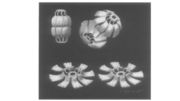
Figure 1- The closed and open structures of MVP. Taken and modified from: Kickhoefer, V. A., Vasu, S. K., and Rome, L. H. (1996) Vaults are the answer, what is the question? Trends Cell Biol. 6, 174 – 178.

