This old version of Proteopedia is provided for student assignments while the new version is undergoing repairs. Content and edits done in this old version of Proteopedia after March 1, 2026 will eventually be lost when it is retired in about June of 2026.
Apply for new accounts at the new Proteopedia. Your logins will work in both the old and new versions.
Main Page
From Proteopedia
| Line 4: | Line 4: | ||
<span style="top:+0.2em; font-size:1.2em; padding-right:5px;float:right;">'''''ISSN 2310-6301'''''</span> | <span style="top:+0.2em; font-size:1.2em; padding-right:5px;float:right;">'''''ISSN 2310-6301'''''</span> | ||
</td></tr> | </td></tr> | ||
| + | |||
<tr> | <tr> | ||
<th style="padding: 10px;background-color: #33ff7b">Selected Pages</th> | <th style="padding: 10px;background-color: #33ff7b">Selected Pages</th> | ||
| Line 10: | Line 11: | ||
<th style="padding: 10px;background-color: #79baff">Education</th> | <th style="padding: 10px;background-color: #79baff">Education</th> | ||
</tr> | </tr> | ||
| + | |||
<tr> | <tr> | ||
<td style="padding: 5px;"> {{Proteopedia:Featured SEL/{{#expr: {{#time:U}} mod {{Proteopedia:Number of SEL articles}}}}}}</td> | <td style="padding: 5px;"> {{Proteopedia:Featured SEL/{{#expr: {{#time:U}} mod {{Proteopedia:Number of SEL articles}}}}}}</td> | ||
| Line 16: | Line 18: | ||
<td style="padding: 5px;"> {{Proteopedia:Featured EDU/{{#expr: {{#time:U}} mod {{Proteopedia:Number of EDU articles}}}}}}</td> | <td style="padding: 5px;"> {{Proteopedia:Featured EDU/{{#expr: {{#time:U}} mod {{Proteopedia:Number of EDU articles}}}}}}</td> | ||
</tr> | </tr> | ||
| + | |||
| + | <tr style="font-size: 1.2em; text-align: center;"> | ||
| + | <td style="padding: 10px;background-color: #33ff7b">Other Selected Pages</td> | ||
| + | <td style="padding: 10px;background-color: #dae4d9">More Art on Science</td> | ||
| + | <td style="padding: 10px;background-color: #f1b840">Other Journals</td> | ||
| + | <td style="padding: 10px;background-color: #79baff">More on Education</td> | ||
| + | </tr> | ||
| + | |||
| + | |||
| + | <tr style="font-size: 1.2em; text-align: center;"> | ||
| + | <td style="padding: 10px;>How to author pages and contribute to Proteopedia</td> | ||
| + | <td style="padding: 10px;></td> | ||
| + | <td style="padding: 10px;>How to get an Interactive 3D Complement for your paper</td> | ||
| + | <td style="padding: 10px;>How to author pages and contribute to Proteopedia</td> | ||
| + | </tr> | ||
| + | |||
</table> | </table> | ||
Revision as of 12:54, 18 October 2018
|
Because life has more than 2D, Proteopedia helps to understand relationships between structure and function. Proteopedia is a free, collaborative 3D-encyclopedia of proteins & other molecules. ISSN 2310-6301 | |||||||||||
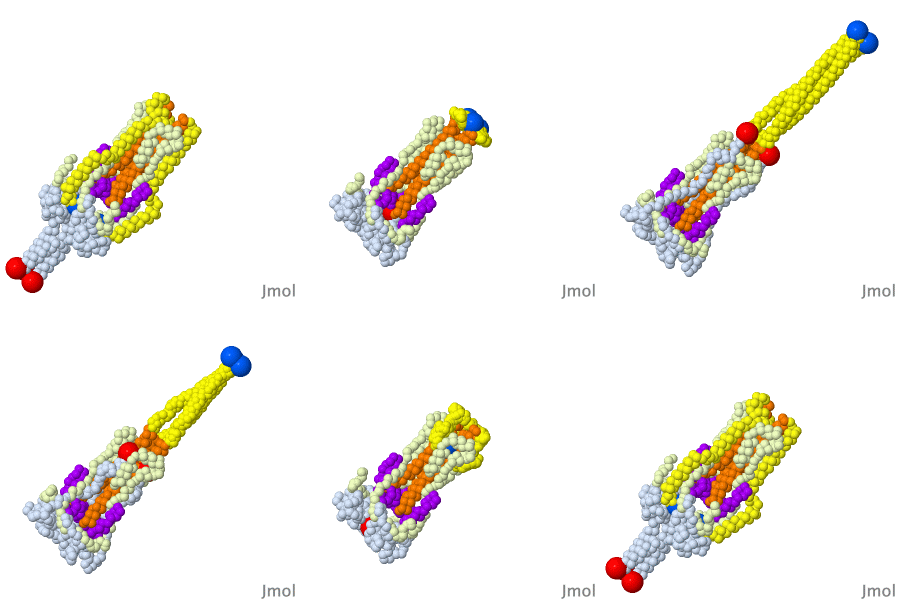
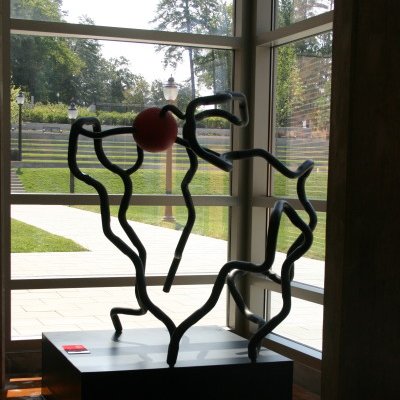
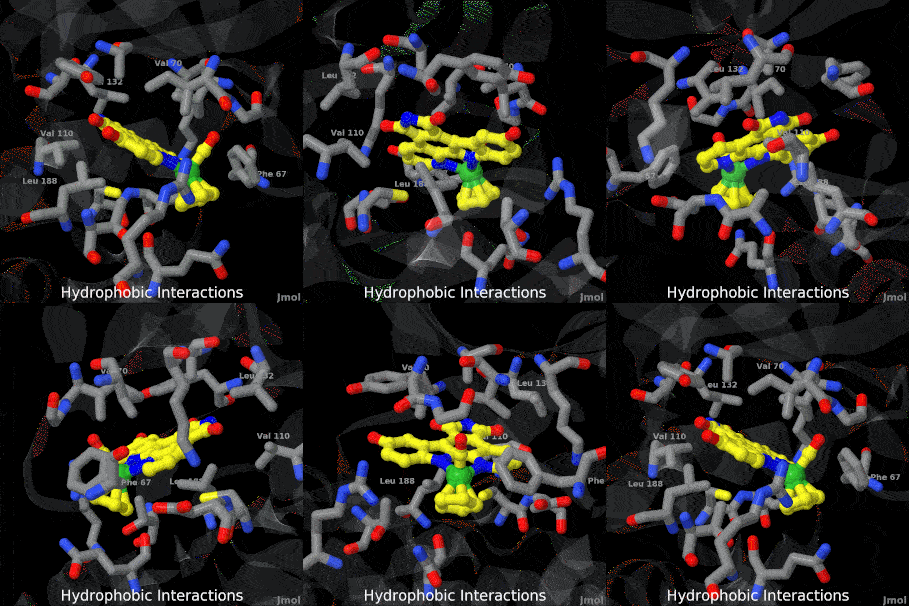
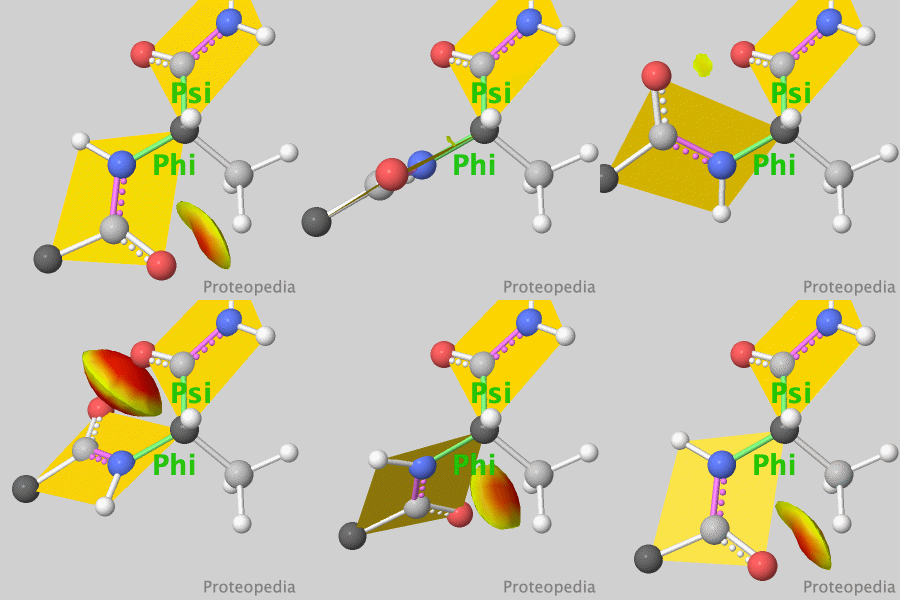
| Selected Pages | Art on Science | Journals | Education | ||||||||
|---|---|---|---|---|---|---|---|---|---|---|---|
|
|
|
|
||||||||
| Other Selected Pages | More Art on Science | Other Journals | More on Education | ||||||||
| How to author pages and contribute to Proteopedia | How to get an Interactive 3D Complement for your paper | How to author pages and contribute to Proteopedia | |||||||||