This old version of Proteopedia is provided for student assignments while the new version is undergoing repairs. Content and edits done in this old version of Proteopedia after March 1, 2026 will eventually be lost when it is retired in about June of 2026.
Apply for new accounts at the new Proteopedia. Your logins will work in both the old and new versions.
Sandbox reserved 1754
From Proteopedia
(Difference between revisions)
| Line 33: | Line 33: | ||
==RecA Structure and Function== | ==RecA Structure and Function== | ||
<Structure load='3cmx' size='350' frame='true' align='right' caption='Insert caption here' scene='Insert optional scene name here' /> | <Structure load='3cmx' size='350' frame='true' align='right' caption='Insert caption here' scene='Insert optional scene name here' /> | ||
| + | |||
RecA is one of the many proteins that is involved in recombination cross over events and during recombination repair in response to single strand DNA breaks. RecA is a rather small monomer protein that can multiplex with itself up to thousands of RecA proteins in order to associate with either dsDNA or ssDNA. The structure of RecA was determined through x-ray crystallography and each monomer contains very distinct structural components. These components are a largely helical 30-residue N-terminal region, a 240-residue | RecA is one of the many proteins that is involved in recombination cross over events and during recombination repair in response to single strand DNA breaks. RecA is a rather small monomer protein that can multiplex with itself up to thousands of RecA proteins in order to associate with either dsDNA or ssDNA. The structure of RecA was determined through x-ray crystallography and each monomer contains very distinct structural components. These components are a largely helical 30-residue N-terminal region, a 240-residue | ||
Revision as of 16:25, 3 October 2022
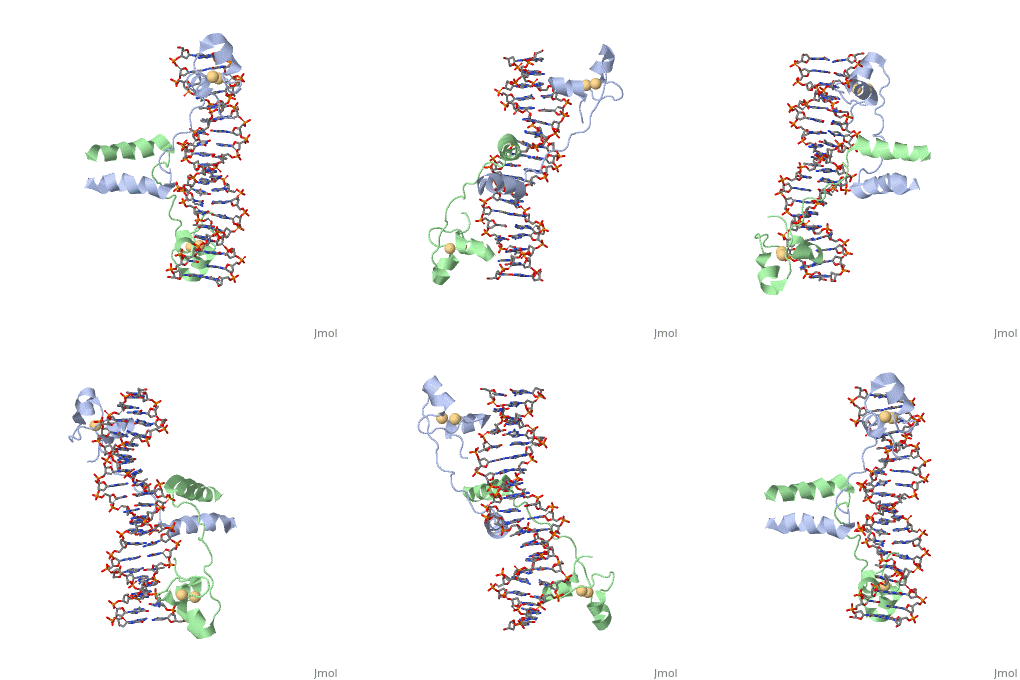
DNA RECOGNITION BY GAL4: STRUCTURE OF A PROTEIN/DNA COMPLEX
| |||||||||||