This old version of Proteopedia is provided for student assignments while the new version is undergoing repairs. Content and edits done in this old version of Proteopedia after March 1, 2026 will eventually be lost when it is retired in about June of 2026.
Apply for new accounts at the new Proteopedia. Your logins will work in both the old and new versions.
Sandbox reserved 1752
From Proteopedia
| Line 61: | Line 61: | ||
== UvrD == | == UvrD == | ||
| + | UvrD, also known as Helicase II is one of many components responsible in repairing DNA damage. UvrD is involved in nucleotide excision repair (NER) and transcription-coupled DNA repair (TCR repair). TCR repair occurs during transcription when Helicase II binds to a RNA polymerase (RNAP) and slides backwards in order to fix the mismatched nucleotide. One of the main structural components of how UvrD binds to RNAP is by having a Tudor-domain like fold. This helps better explain the UvrD-RNAP interaction, which is a better explanation than just having nucleic-acid affinity. A main cause in damage to DNA, which requires for nucleotide excision repair is from UV radiation, which can come from multiple sources, including sunlight and UV light from tanning beds. | ||
Revision as of 02:57, 4 October 2022
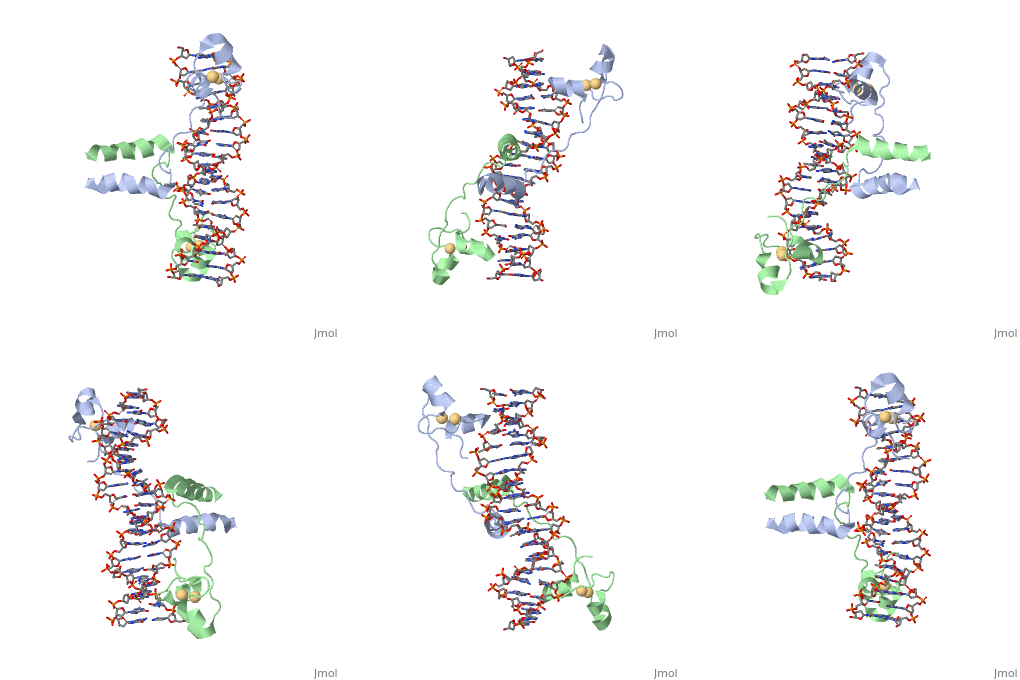
DNA RECOGNITION BY GAL4: STRUCTURE OF A PROTEIN/DNA COMPLEX
| |||||||||||

UvrD
UvrD, also known as Helicase II is one of many components responsible in repairing DNA damage. UvrD is involved in nucleotide excision repair (NER) and transcription-coupled DNA repair (TCR repair). TCR repair occurs during transcription when Helicase II binds to a RNA polymerase (RNAP) and slides backwards in order to fix the mismatched nucleotide. One of the main structural components of how UvrD binds to RNAP is by having a Tudor-domain like fold. This helps better explain the UvrD-RNAP interaction, which is a better explanation than just having nucleic-acid affinity. A main cause in damage to DNA, which requires for nucleotide excision repair is from UV radiation, which can come from multiple sources, including sunlight and UV light from tanning beds.
