This old version of Proteopedia is provided for student assignments while the new version is undergoing repairs. Content and edits done in this old version of Proteopedia after March 1, 2026 will eventually be lost when it is retired in about June of 2026.
Apply for new accounts at the new Proteopedia. Your logins will work in both the old and new versions.
Carbon Fixation
From Proteopedia
(Difference between revisions)
(New page: <StructureSection load='1rcx' size='350' side='right' caption='Spinach RuBisCO 8 large and 8 small chains complex with substrate ribulose-1,5- bisphosphate, 1rcx'> This is a default te...) |
|||
| Line 1: | Line 1: | ||
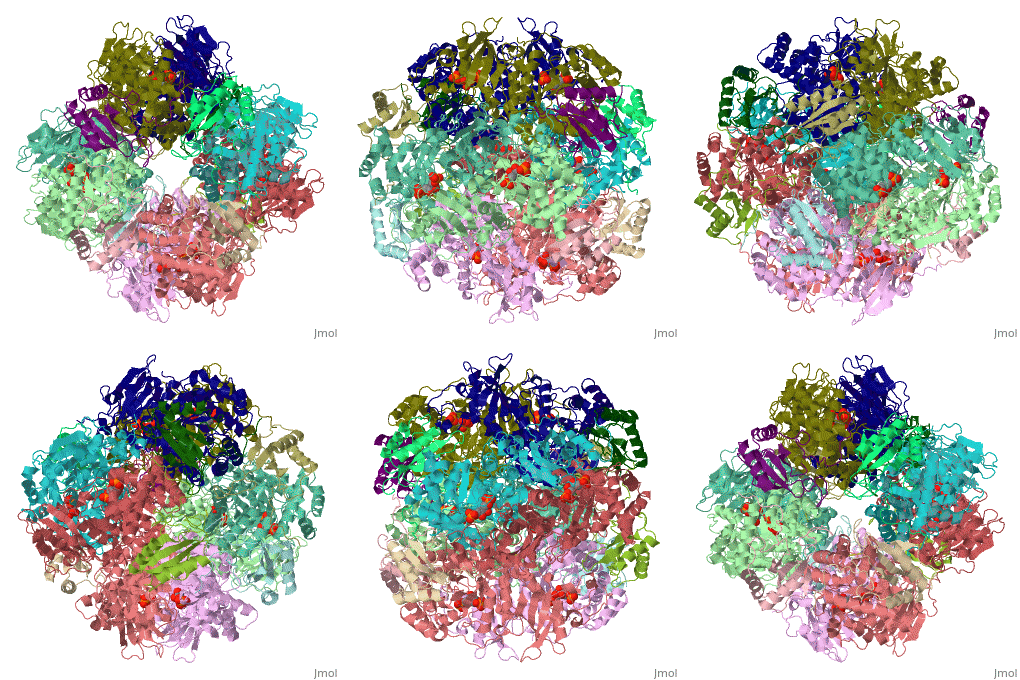
<StructureSection load='1rcx' size='350' side='right' caption='Spinach RuBisCO 8 large and 8 small chains complex with substrate ribulose-1,5- bisphosphate, [[1rcx]]'> | <StructureSection load='1rcx' size='350' side='right' caption='Spinach RuBisCO 8 large and 8 small chains complex with substrate ribulose-1,5- bisphosphate, [[1rcx]]'> | ||
| - | + | Biological carbon fixation or сarbon assimilation is the process by which inorganic carbon (particularly in the form of carbon dioxide) is converted to organic compounds by living organisms. See also [https://en.wikipedia.org/wiki/Biological_carbon_fixation]. | |
| - | + | ||
| - | + | Organisms that grow by fixing carbon are called autotrophs, which include photoautotrophs (which use sunlight), and lithoautotrophs (which use inorganic oxidation). | |
| - | + | ||
| - | + | ||
| - | + | ||
| - | + | ||
| - | + | ||
| - | + | ||
| - | + | ||
| - | + | ||
| + | Seven autotrophic carbon fixation pathways are known. | ||
</StructureSection> | </StructureSection> | ||
== References == | == References == | ||
<references/> | <references/> | ||
Revision as of 09:26, 19 December 2022
| |||||||||||