This old version of Proteopedia is provided for student assignments while the new version is undergoing repairs. Content and edits done in this old version of Proteopedia after March 1, 2026 will eventually be lost when it is retired in about June of 2026.
Apply for new accounts at the new Proteopedia. Your logins will work in both the old and new versions.
Nitrogenase
From Proteopedia
| Line 7: | Line 7: | ||
== Exploring the Structure == | == Exploring the Structure == | ||
| - | + | ||
| + | <applet load='1ema' size='500' frame='true' align='right' caption='Vue en 3D de la GFP' /> | ||
You can take a close look at the chromophore of GFP in the PDB entry [[1ema]]. The backbone of the entire protein is shown here on the left. The protein chain forms a cylindrical can (shown in blue), with one portion of the strand threading straight through the middle (shown in green). The chromophore is found right in the middle of the can, totally shielded from the surrounding environment. This shielding is essential for the fluorescence. The jostling water molecules would normally rob the chromophore of its energy once it absorbs a photon. But inside the protein, it is protected, releasing the energy instead as a slightly less energetic photon of light. The chromophore (shown in the close-up on the right) forms spontaneously from three amino acids in the protein chain: a glycine, a tyrosine and a threonine (or serine). Notice how the glycine and the threonine have formed a new bond, creating an unusual five-membered ring. | You can take a close look at the chromophore of GFP in the PDB entry [[1ema]]. The backbone of the entire protein is shown here on the left. The protein chain forms a cylindrical can (shown in blue), with one portion of the strand threading straight through the middle (shown in green). The chromophore is found right in the middle of the can, totally shielded from the surrounding environment. This shielding is essential for the fluorescence. The jostling water molecules would normally rob the chromophore of its energy once it absorbs a photon. But inside the protein, it is protected, releasing the energy instead as a slightly less energetic photon of light. The chromophore (shown in the close-up on the right) forms spontaneously from three amino acids in the protein chain: a glycine, a tyrosine and a threonine (or serine). Notice how the glycine and the threonine have formed a new bond, creating an unusual five-membered ring. | ||
| - | + | [[Image:Lc18 1ema.gif|550px|thumb|vignette de 1ema]] | |
Revision as of 10:33, 3 July 2008
Welcome to Strasbourg !
J'apprend ce qu'est un [1] ! Je suis content de revoir le site de 1ogs.
Exploring the Structure
|
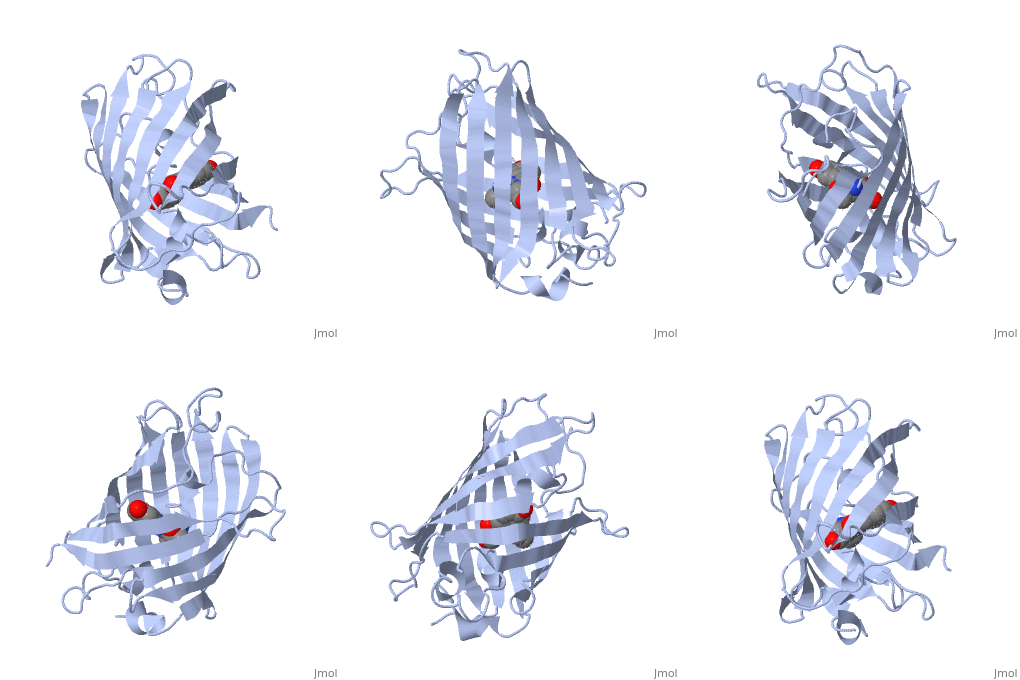
You can take a close look at the chromophore of GFP in the PDB entry 1ema. The backbone of the entire protein is shown here on the left. The protein chain forms a cylindrical can (shown in blue), with one portion of the strand threading straight through the middle (shown in green). The chromophore is found right in the middle of the can, totally shielded from the surrounding environment. This shielding is essential for the fluorescence. The jostling water molecules would normally rob the chromophore of its energy once it absorbs a photon. But inside the protein, it is protected, releasing the energy instead as a slightly less energetic photon of light. The chromophore (shown in the close-up on the right) forms spontaneously from three amino acids in the protein chain: a glycine, a tyrosine and a threonine (or serine). Notice how the glycine and the threonine have formed a new bond, creating an unusual five-membered ring.
Proteopedia Page Contributors and Editors (what is this?)
Michal Harel, Alexander Berchansky, Eran Hodis, David Canner, Joel L. Sussman

