This old version of Proteopedia is provided for student assignments while the new version is undergoing repairs. Content and edits done in this old version of Proteopedia after March 1, 2026 will eventually be lost when it is retired in about June of 2026.
Apply for new accounts at the new Proteopedia. Your logins will work in both the old and new versions.
Pertussis Toxin-ATP Complex
From Proteopedia
|
|
Contents |
introduction
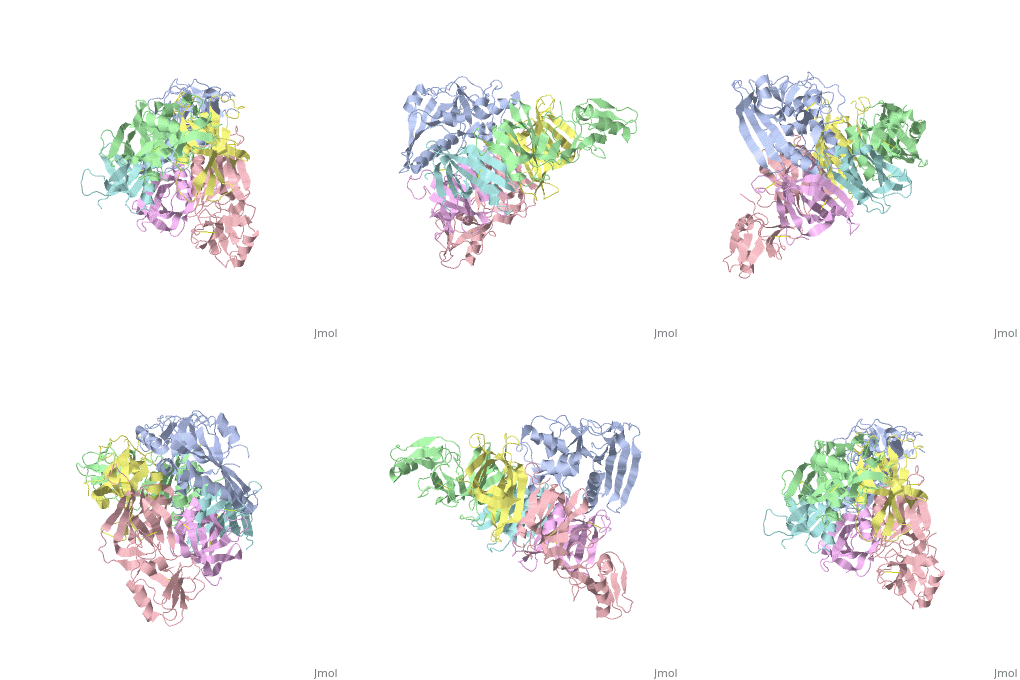
Protussis Toxins is a major virulence factor of Bordetella pertussis that cause whooping cough. Whooping cough, also known as pertusis, is a highly contagious bacterial disease caused by the bacteria Bordetella pertussis. This disease had been characterized by severe cough that has been documented to cause subconjunctival hemorrhages, rib fractures, hernias, fainting and vertebral artery dissection. The pertussis toxin has been characterized as being a AB toxin meaning that there are 2 subunits: A subunit possesses the enzyme activity and the B subunit it the receptor binding portion. Together this AB toxin colonizes the respiratory tract and becomes activated by destabilization due to the binding of ATP.
structure
The protussis toxin is a AB5 toxin consisting of a six-component protein complex. With that in mind, this protein is a hexamer containing a catalytic (S1) subunit that is tightly associated with the pentameric cell-binding component (B-oligomer). The S1 component is a single subunit while the B-oligomer is a pentamer composed of four types of subunits: S2,S3, two copies of S4, and S5. This B subnit is what binds to the terminal sialic acid residues.
