We apologize for Proteopedia being slow to respond. For the past two years, a new implementation of Proteopedia has been being built. Soon, it will replace this 18-year old system. All existing content will be moved to the new system at a date that will be announced here.

Main Page

From Proteopedia

Revision as of 14:44, 18 October 2018 by Jaime Prilusky (Talk | contribs)
Jump to: navigation, search

Because life has more than 2D, Proteopedia helps to understand relationships between structure and function. Proteopedia is a free, collaborative 3D-encyclopedia of proteins & other molecules. ISSN 2310-6301

Selected Pages Art on Science Journals Education
About this image
Coronavirus Spike Protein Membrane Fusion

by Eric Martz
SARS-CoV-2 spike protein "spears" the host membrane with a fusion peptide and drags the virus envelope membrane transmembrane domain close to the host membrane, initiating fusion. This moves the virus RNA genome into the host cell, initiating infection.
>>> Visit this page >>>

About this image
Molecular Sculpture

by Eric Martz
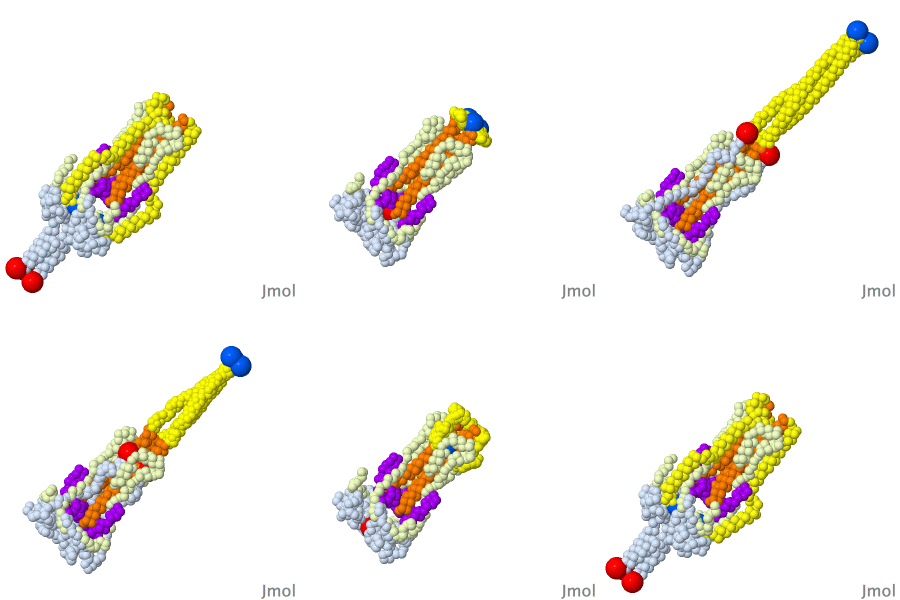
A historical review on sculptures and physical models of macromolecules.

>>> Visit this page >>>

About this image
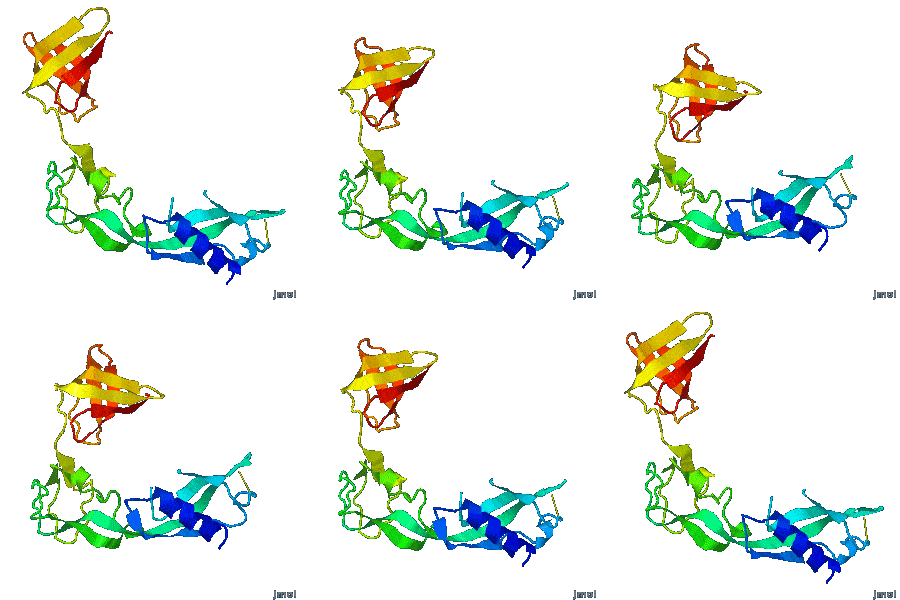
Structural flexibility of the periplasmic protein, FlgA, regulates flagellar P-ring assembly in Salmonella enterica.

H Matsunami, YH Yoon, VA Meshcheryakov, K Namba, FA Samatey. Scientific Reports 2016 doi: 10.1038/srep27399
A periplasmic flagellar chaperone protein, FlgA, is required for P-ring assembly in bacterial flagella of taxa such as Salmonella enterica or Escherichia coli. Here we present the open and closed crystal structures of FlgA from Salmonella enterica serovar Typhimurium, grown under different crystallization conditions. An intramolecular disulfide cross-linked form of FlgA caused a dominant negative effect on motility of the wild-type strain.

>>> Visit this I3DC complement >>>

About this image
Touch-Sensitive Channel

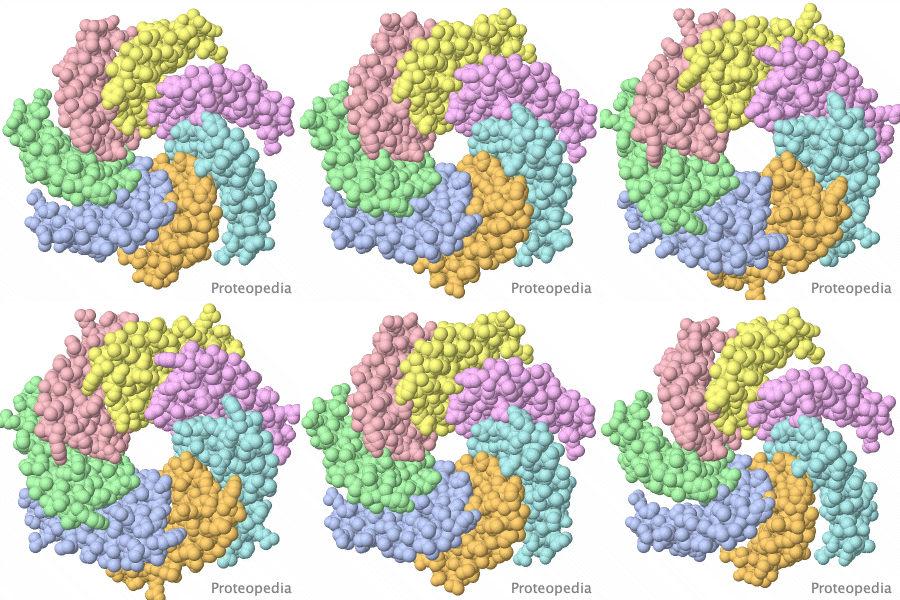
Touching stretches cell membranes, opening mechanosensitive ion channels, leading to sensation by the nervous system. Pictured is the transmembrane region of a similar channel in bacteria. When closed, the narrow opening is lined by hydrophobic amino acid sidechains, making it non-conductive to ions.

>>> See more animations and explanation >>>

Other Selected Pages Featured in Art Featured in I3DC Featured in Education

How to author pages and contribute to Proteopedia

Video Guides

Who knows ...

All Art on Science

How to get an Interactive 3D Complement for your paper

List of Interactive Complements

About Interactive 3D Complements

Teaching Strategies Using Proteopedia

Examples of Pages for Teaching

How to author pages and contribute to Proteopedia

About Image:Contact-email.png Table of Contents Structure Index Help

Proteopedia Page Contributors and Editors (what is this?)

Joel L. Sussman, Jaime Prilusky

Personal tools