We apologize for Proteopedia being slow to respond. For the past two years, a new implementation of Proteopedia has been being built. Soon, it will replace this 18-year old system. All existing content will be moved to the new system at a date that will be announced here.

Main Page

From Proteopedia

Revision as of 16:19, 30 September 2025 by Joel L. Sussman (Talk | contribs)
Jump to: navigation, search
 ISSN 2310-6301

As life is more than 2D, Proteopedia helps to bridge the gap between 3D structure & function of biomacromolecules

Proteopedia presents this information in a user-friendly way as a collaborative & free 3D-encyclopedia of proteins & other biomolecules.

Selected Research Pages In Journals Education
About this image
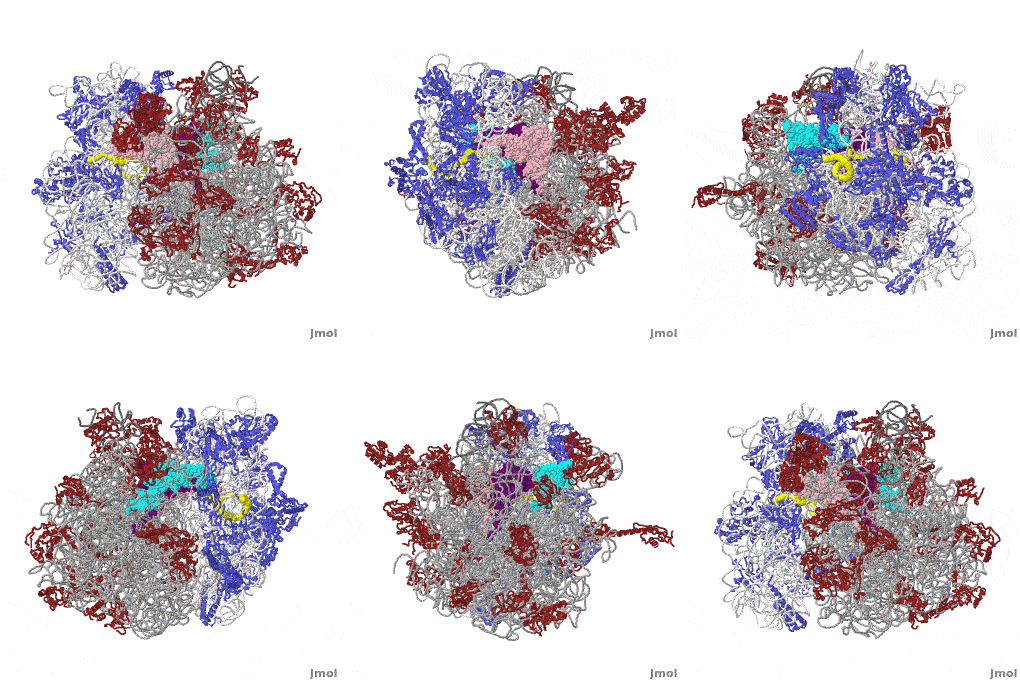
Self-assembling Nano-Cages

Huddy, Hsia, Kibler, Xu & 27 others in the Nobel Prize winning group of David Baker have designed standardized protein building blocks that self assemble into a wide range of nanostructures. The building blocks attach to each other at engineered sites and angles, and come in various sizes.

>>> Get a quick overview! >>>

About this image
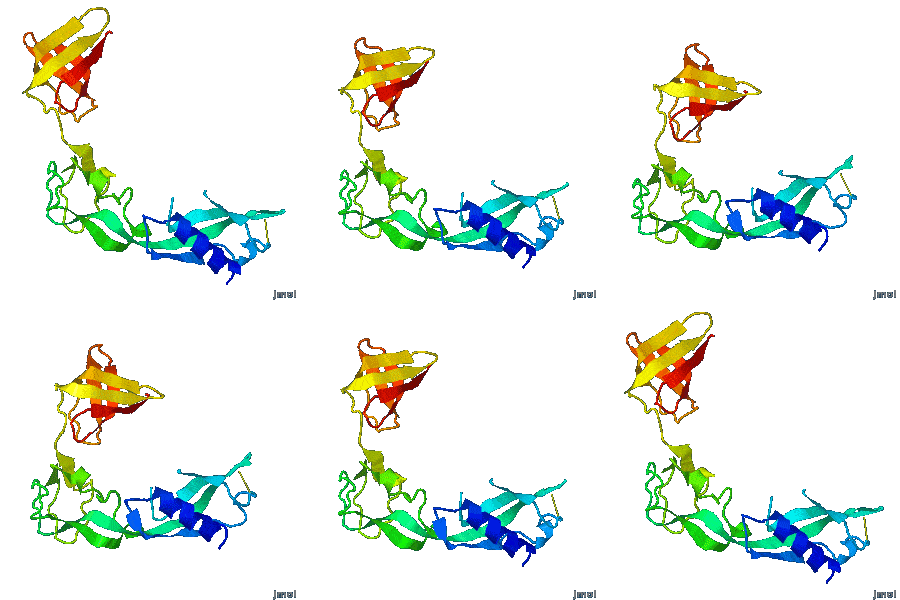
Interconversion of the specificities of human lysosomal enzymes associated with Fabry and Schindler diseases.

IB Tomasic, MC Metcalf, AI Guce, NE Clark, SC Garman. J. Biol. Chem. 2010 doi: 10.1074/jbc.M110.118588
The human lysosomal enzymes α-galactosidase and α-N-acetylgalactosaminidase share 46% amino acid sequence identity and have similar folds. Using a rational protein engineering approach, we interconverted the enzymatic specificity of α-GAL and α-NAGAL. The engineered α-GAL retains the antigenicity but has acquired the enzymatic specificity of α-NAGAL. Conversely, the engineered α-NAGAL retains the antigenicity but has acquired the enzymatic specificity of the α-GAL enzyme. Comparison of the crystal structures of the designed enzyme to the wild-type enzymes shows that active sites superimpose well, indicating success of the rational design. The designed enzymes might be useful as non-immunogenic alternatives in enzyme replacement therapy for treatment of lysosomal storage disorders such as Fabry disease.

>>> Visit this I3DC complement >>>

About this image
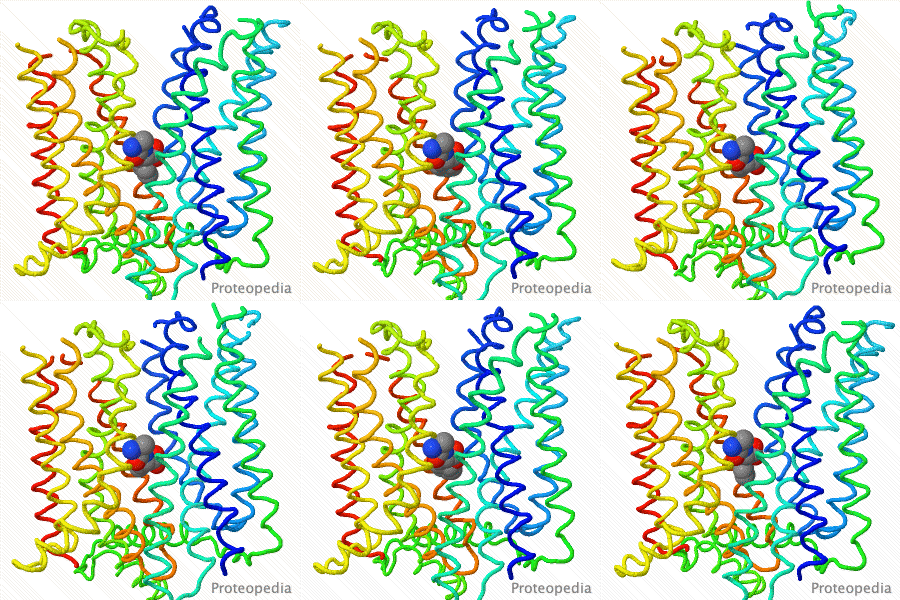
You Are What You Eat!

Above is an integral membrane protein that takes up, into your intestinal cells, orally consumed peptide nutrients and drugs. Its lumen-face (top) opens and binds peptide or drug (small solid object in the center), then closes, while its cytoplasmic face (bottom) opens to release its cargo into the intestinal cell, which passes it on to the blood circulation.

>>> See more animations and explanation >>>

How to add content to Proteopedia

Video Guides

Who knows ...

About Interactive 3D Complements - I3DCs

List of I3DCs

How to get an I3DC for your paper

Teaching strategies using Proteopedia

Examples of pages for teaching

How to add content to Proteopedia

About Contact Hot News Table of Contents Structure Index Help

Proteopedia Page Contributors and Editors (what is this?)

Joel L. Sussman, Jaime Prilusky

Personal tools