Sandbox Home

From Proteopedia

Revision as of 16:05, 30 September 2025 by Joel L. Sussman (Talk | contribs)
Jump to: navigation, search
<
ISSN 2310-6301

As life is more than 2D, Proteopedia helps to bridge the gap between 3D structure & function of biomacromolecules

Proteopedia presents this information in a user-friendly way as a collaborative & free 3D-encyclopedia of proteins & other biomolecules.


Selected Research Pages In Journals Education
About this image
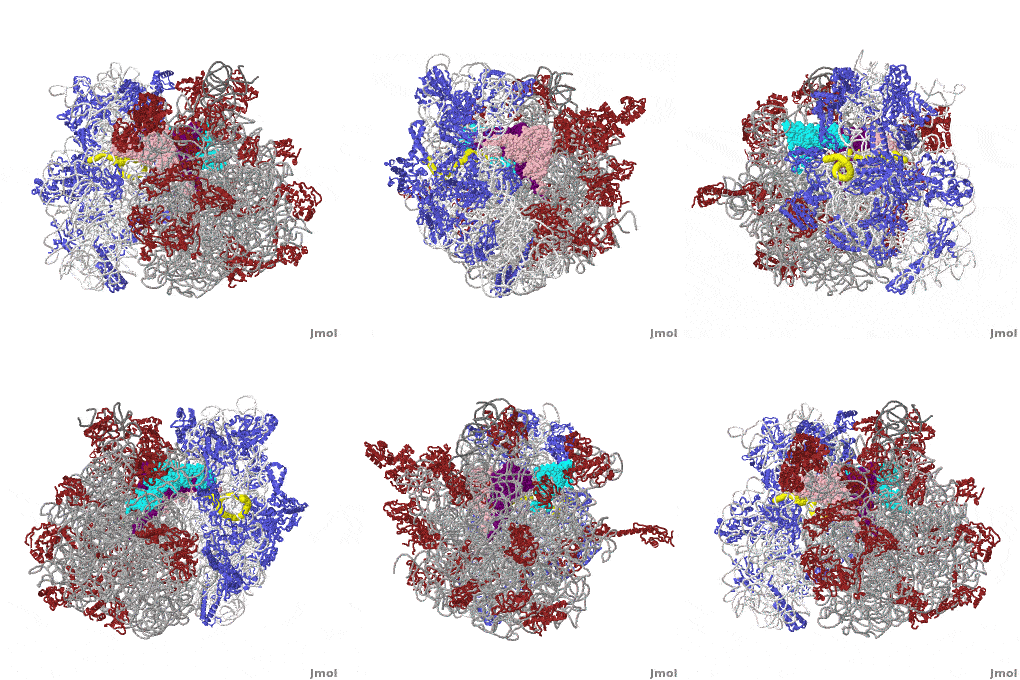
The ribosome

by Wayne Decatur
The 2009 Nobel Prize in Chemistry was awarded for studies of the ribosome. The ribosome is the machine in your cells that accurately and efficiently decodes the genetic information stored in your genome and synthesizes the corresponding polypeptide chain one amino acid at a time in the process of translation. These structures are considered landmarks for the fact they showed clearly the major contributions to decoding and peptide bond synthesis come from RNA and not protein, as well as for the sheer size of the structures determined.

>>> Visit this page >>>

About this image
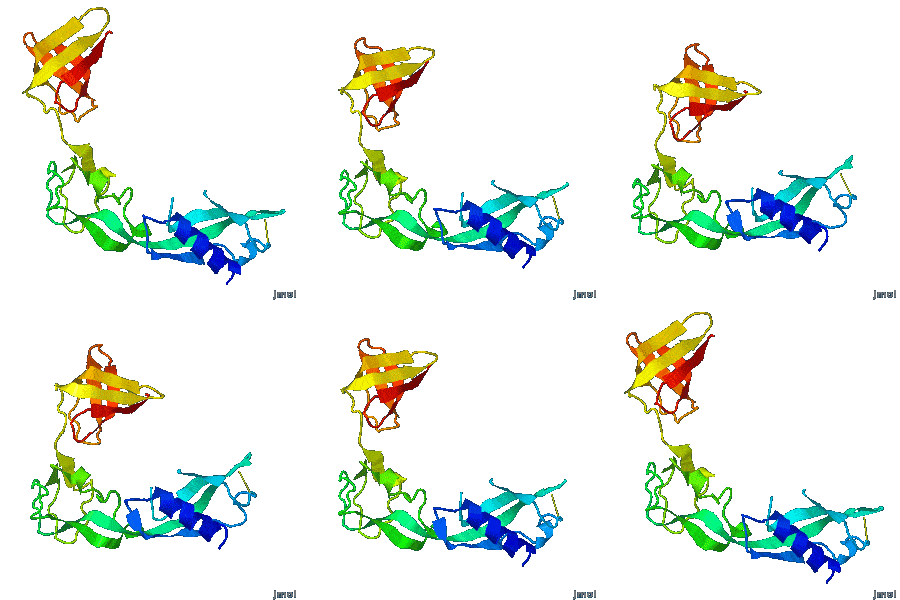
Structural flexibility of the periplasmic protein, FlgA, regulates flagellar P-ring assembly in Salmonella enterica.

H Matsunami, YH Yoon, VA Meshcheryakov, K Namba, FA Samatey. Scientific Reports 2016 doi: 10.1038/srep27399
A periplasmic flagellar chaperone protein, FlgA, is required for P-ring assembly in bacterial flagella of taxa such as Salmonella enterica or Escherichia coli. Here we present the open and closed crystal structures of FlgA from Salmonella enterica serovar Typhimurium, grown under different crystallization conditions. An intramolecular disulfide cross-linked form of FlgA caused a dominant negative effect on motility of the wild-type strain.

>>> Visit this I3DC complement >>>

About this image
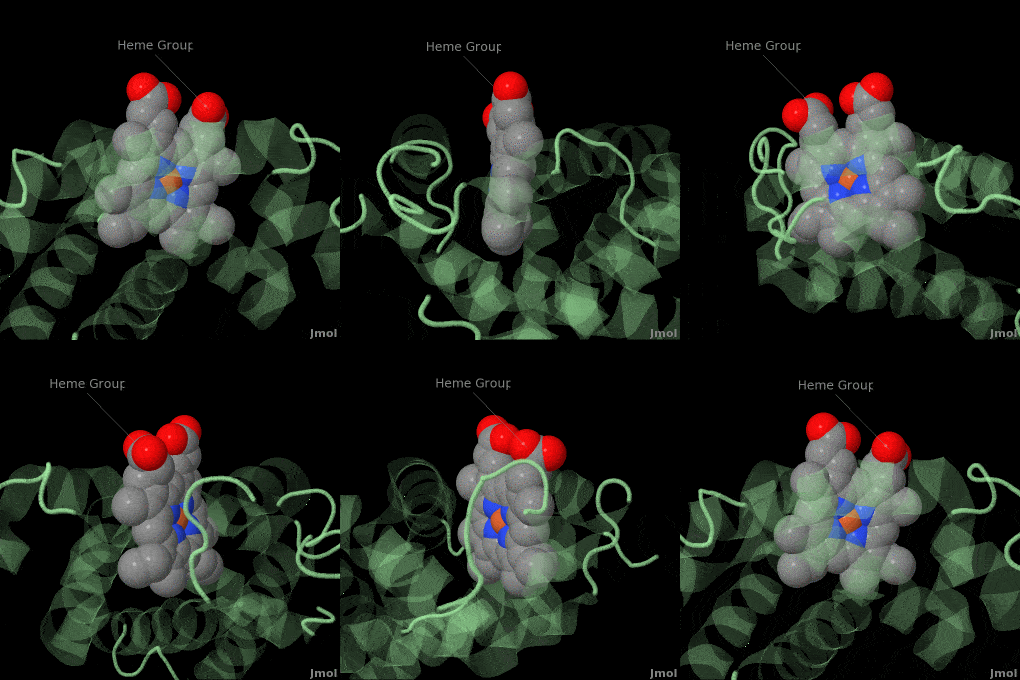
Tutorial: How do we get the oxygen we breathe

J Prilusky, E Hodis doi: 10.14576/431679.1869588
This tutorial is designed for high school and beginning college students. When we breathe oxygen from the air is taken up by blood in our lungs and soon delivered to each of the cells in our body through our circulatory system. Among other uses, our cells use oxygen as the final electron acceptor in a process called aerobic respiration – a process that converts the energy in food and nutrients into a form of energy that the cell can readily use (molecules of ATP, adenosine triphosphate).

>>> Visit this tutorial >>>

How to add content to Proteopedia

Video Guides

Who knows ...

About Interactive 3D Complements - I3DCs

List of I3DCs

How to get an I3DC for your paper

Teaching strategies using Proteopedia

Examples of pages for teaching

How to add content to Proteopedia

About Contact Hot News Table of Contents Structure Index Help
Personal tools