This old version of Proteopedia is provided for student assignments while the new version is undergoing repairs. Content and edits done in this old version of Proteopedia after March 1, 2026 will eventually be lost when it is retired in about June of 2026.
Apply for new accounts at the new Proteopedia. Your logins will work in both the old and new versions.
User:Mumal Usman/Sandbox 1
From Proteopedia
Introduction
|
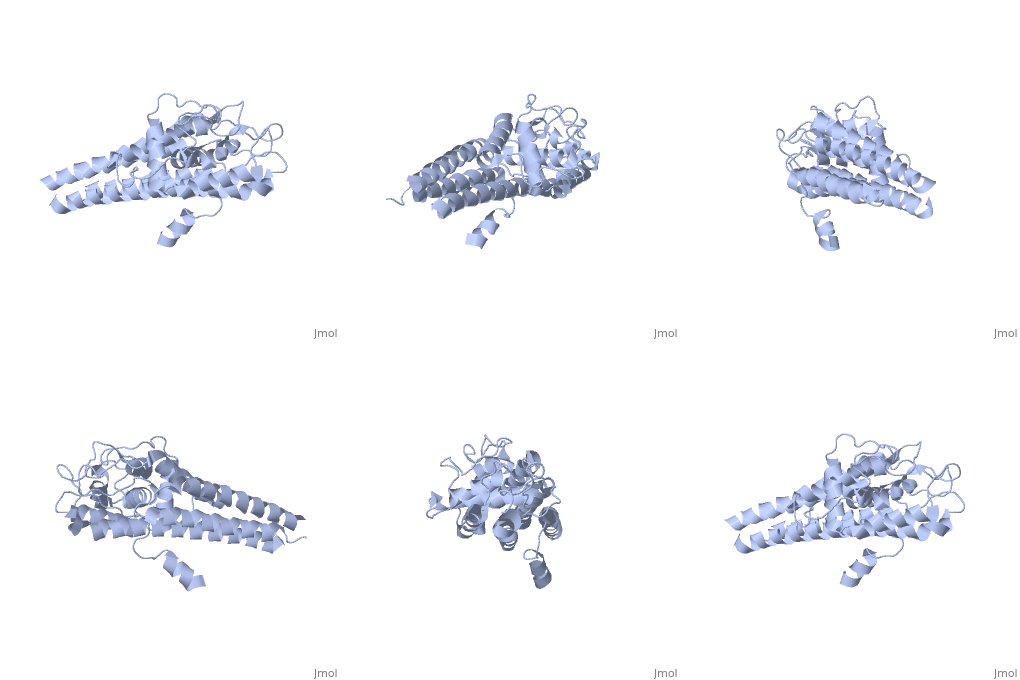
The successful infection of Lyme disease can be attributed to its many membrane proteins. The surface lipoprotein, VlsE, is responsible for the infectious properties of the Lyme disease spirochete, Borrelia burgdorferi[1]. VlsE uses several immune evasive strategies, giving the disease its characteristically infectious behavior. Specifically, antigenic variation and suppression of innate and acquired immune response aid the disease in remaining in the host[2]. Antigenic variation is the most efficient strategy in order to protect the infectious properties of the spirochete[3]. Expressed antigenic variation is produced by segmental gene conversation through variable regions of the lipoprotein[4,5].
Structure
| |||||||||||
