This old version of Proteopedia is provided for student assignments while the new version is undergoing repairs. Content and edits done in this old version of Proteopedia after March 1, 2026 will eventually be lost when it is retired in about June of 2026.
Apply for new accounts at the new Proteopedia. Your logins will work in both the old and new versions.
HIV-1 Reverse Transcriptase in Complex with Nevirapine
From Proteopedia
Function of HIV Reverse Transcriptase
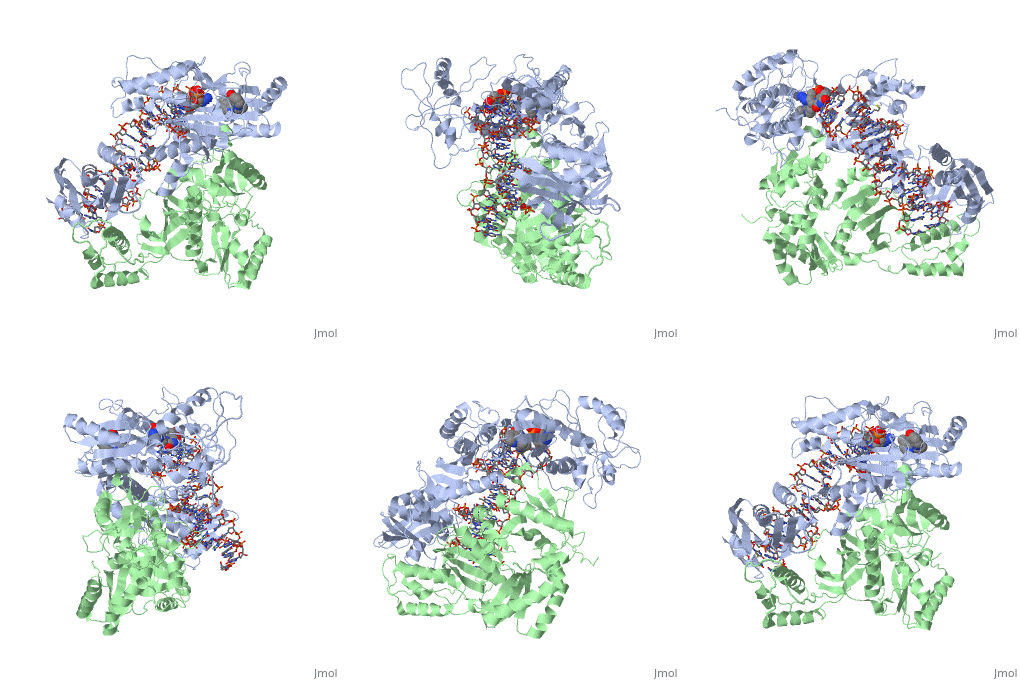
Reverse Transcriptase is a viral encoded enzyme that converts the viral single-stranded RNA genome into a double-stranded DNA provirus that is integrated into the host chromosome in the host cell's nucleus. The process of converting viral ssRNA into dsDNA that can incorporate into the host chromosome is called retrotranscription, and is characteristic of all retrovirus. HIV-1 reverse transcriptase is encoded by the human immunodeficiency virus, well known as the etiological agent of acquired immunodeficiency syndrome (AIDS). RT consists of two structurally similar subunits, the p66 and p51. The p66 subunit contains two enzymatically active domains, polymerase and RNase H domains. The p55 subunit maintains the proper folding of the p66 domain ensuring its catalytic function. RT carries out several activities related to retrotranscription: RNA and DNA-dependent DNA synthesis, RNase H activity, strand transfer, and strand displacement synthesis.
| |||||||||||