We apologize for Proteopedia being slow to respond. For the past two years, a new implementation of Proteopedia has been being built. Soon, it will replace this 18-year old system. All existing content will be moved to the new system at a date that will be announced here.

Main Page

From Proteopedia

Revision as of 14:29, 18 October 2018 by Jaime Prilusky (Talk | contribs)
Jump to: navigation, search

Because life has more than 2D, Proteopedia helps to understand relationships between structure and function. Proteopedia is a free, collaborative 3D-encyclopedia of proteins & other molecules. ISSN 2310-6301

Selected Pages Art on Science Journals Education
About this image
Avian Influenza Neuraminidase

Eric Martz
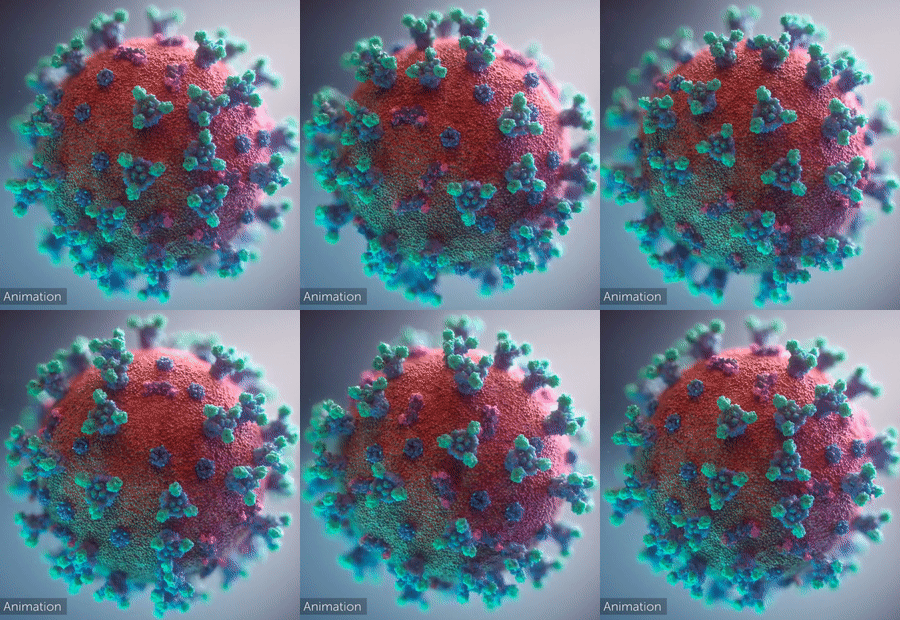
The first new influenza virus to emerge as an imminent pandemic threat in the 21st century is H1N1 swine flu. The drug oseltamivir (Tamiflu®) inhibits flu neuraminidase, a component necessary for virus spread, in susceptible flu strains. The development of oseltamivir was guided, in part, by crystallographically determined structures of flu neuraminidase, which is a homotetramer, shown with oseltamivir bound. Oseltamivir was designed to fit N2/N9 (neuraminidases from other strains of flu). Serendipitously, it also fits N1 by induced fit.

>>> Visit this page >>>

About this image
Molecular Sculpture

by Eric Martz
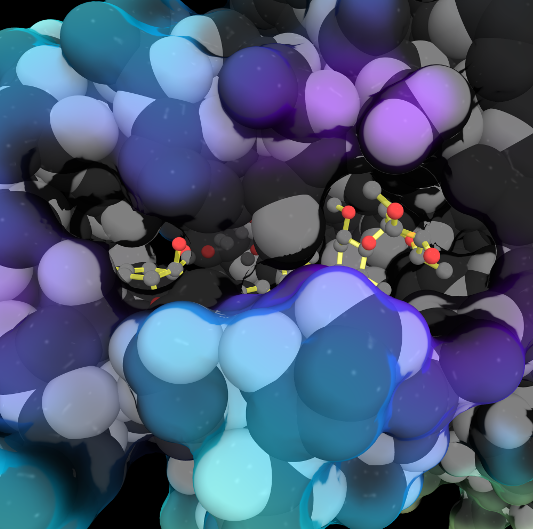
A historical review on sculptures and physical models of macromolecules.

>>> Visit this page >>>

About this image
Geobacter nanowire structure surprise.

F Wang, Y Gu, JP O'Brien, SM Yi, SE Yalcin, V Srikanth, C Shen, D Vu, NL Ing, AI Hochbaum, EH Egelman, NS Malvankar. Cell 2019 doi: 10.1016/j.cell.2019.03.029
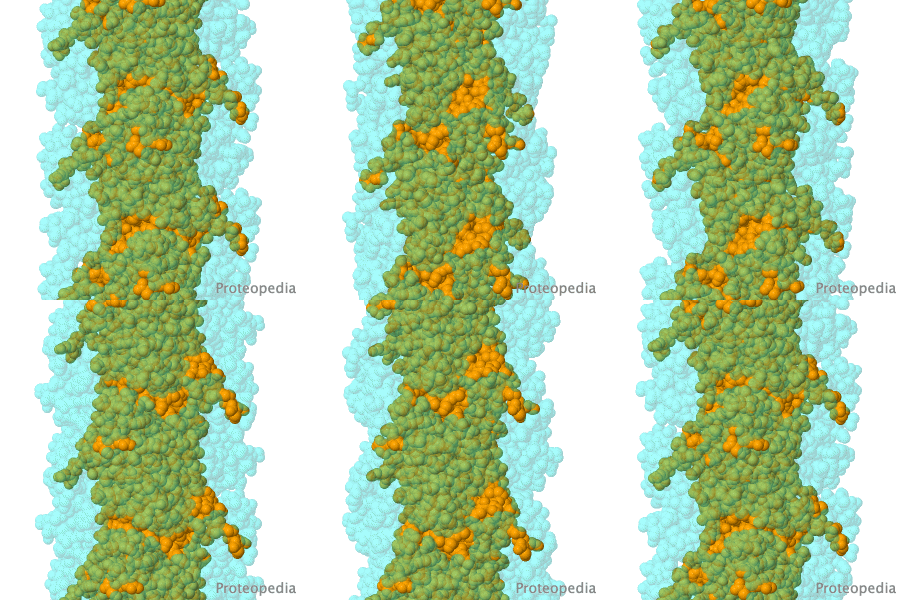
Bacteria living in anaerobic environments (no oxygen) need alternative electron acceptors in order to get energy from their food. An acceptor abundant in the earth's crust is red iron oxide ("rust"), which gets reduced to black iron oxide (magnetite). Many bacteria, such as Geobacter, get their metabolic energy by transferring electrons to acceptors that are multiple cell diameters distant, using protein nanowires. These were long thought to be pili. But when the structure of the nanowires was solved in 2019, to everyone's surprise, they turned out to be unprecedented linear polymers of multi-heme cytochromes. The hemes form an electrically conductive chain in the cores of these nanowires.

>>> Visit I3DC Interactive Visualizations >>>

About this image
Touch-Sensitive Channel

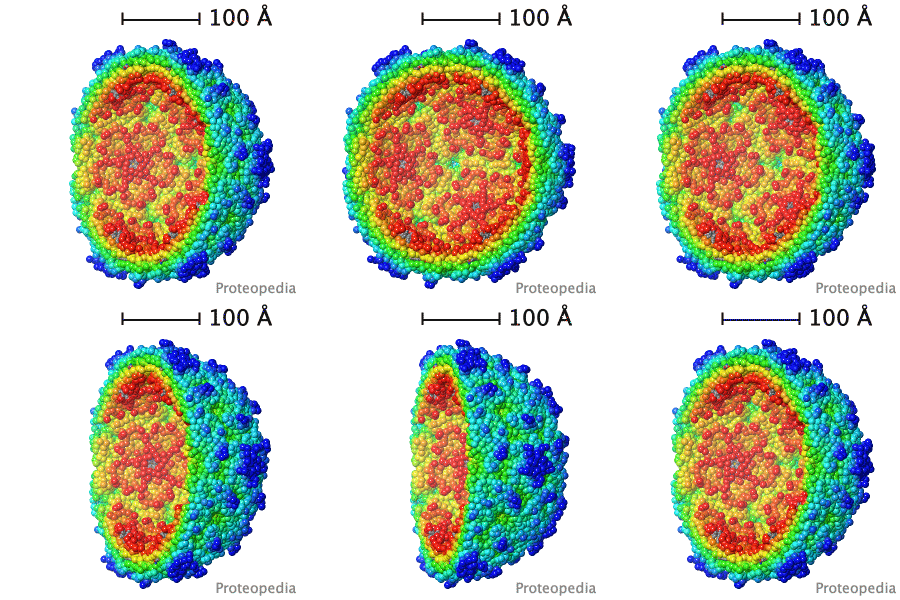
Touching stretches cell membranes, opening mechanosensitive ion channels, leading to sensation by the nervous system. Pictured is the transmembrane region of a similar channel in bacteria. When closed, the narrow opening is lined by hydrophobic amino acid sidechains, making it non-conductive to ions.

>>> See more animations and explanation >>>

Other Selected Pages More Art on Science Other Journals More on Education

How to author pages and contribute to Proteopedia

Video Guides

Who knows ...

How to get an Interactive 3D Complement for your paper

List of Interactive Complements

About Interactive 3D Complements

Teaching Strategies Using Proteopedia

Examples of Pages for Teaching

How to author pages and contribute to Proteopedia

About Image:Contact-email.png Help

Proteopedia Page Contributors and Editors (what is this?)

Joel L. Sussman, Jaime Prilusky

Personal tools