We apologize for Proteopedia being slow to respond. For the past two years, a new implementation of Proteopedia has been being built. Soon, it will replace this 18-year old system. All existing content will be moved to the new system at a date that will be announced here.

Main Page

From Proteopedia

Revision as of 09:56, 21 October 2018 by Joel L. Sussman (Talk | contribs)
Jump to: navigation, search
ISSN 2310-6301

As life is more than 2D, Proteopedia helps to bridge the 3D relationships between function & structure of biomacromolecules


Selected Pages Art on Science Journals Education
About this image
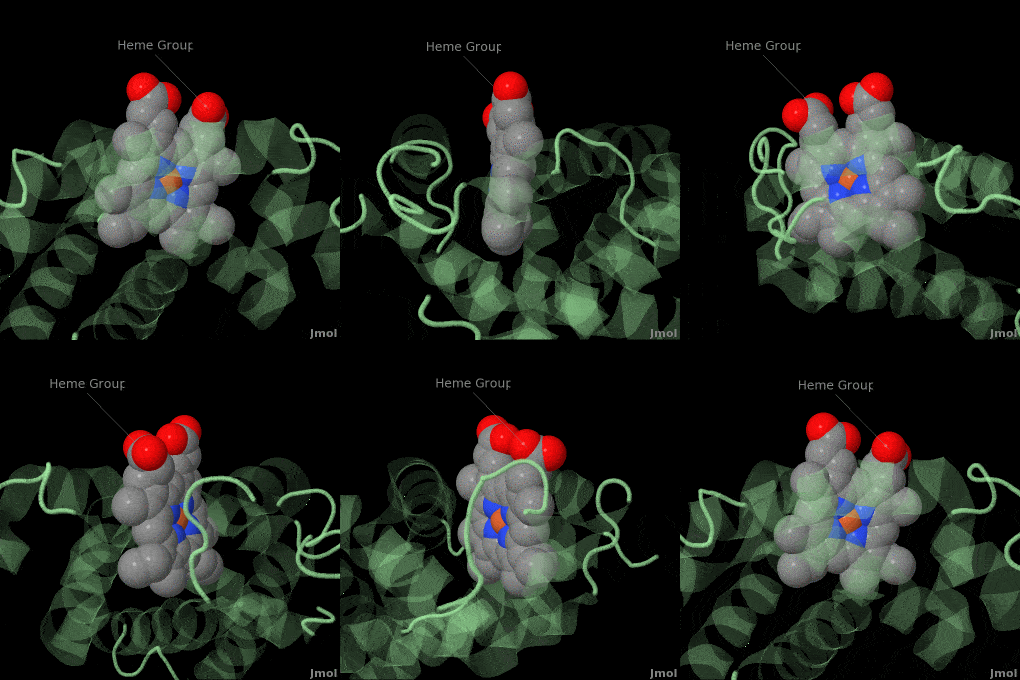
Green Fluorescent Protein

by Eran Hodis
Green fluorescent protein (GFP) is a bioluminescent polypeptide isolated from the jellyfish Aequorea victoria. GFP converts the blue chemiluminescence of aequorin into green fluorescent light. In the laboratory, GFP can be incorporated into a variety of biological systems in order to function as a marker protein. Since its discovery in 1962, GFP has become a significant contributor to the research of monitoring gene expression, localization, mobility, traffic, or interactions between various membrane and cytoplasmic proteins.

>>> Visit this page >>>

About this image
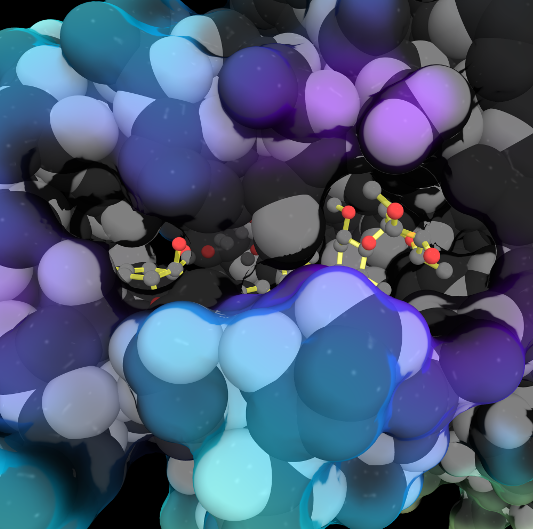
Molecular Sculpture

by Eric Martz
A historical review on sculptures and physical models of macromolecules.

>>> Visit this page >>>

About this image
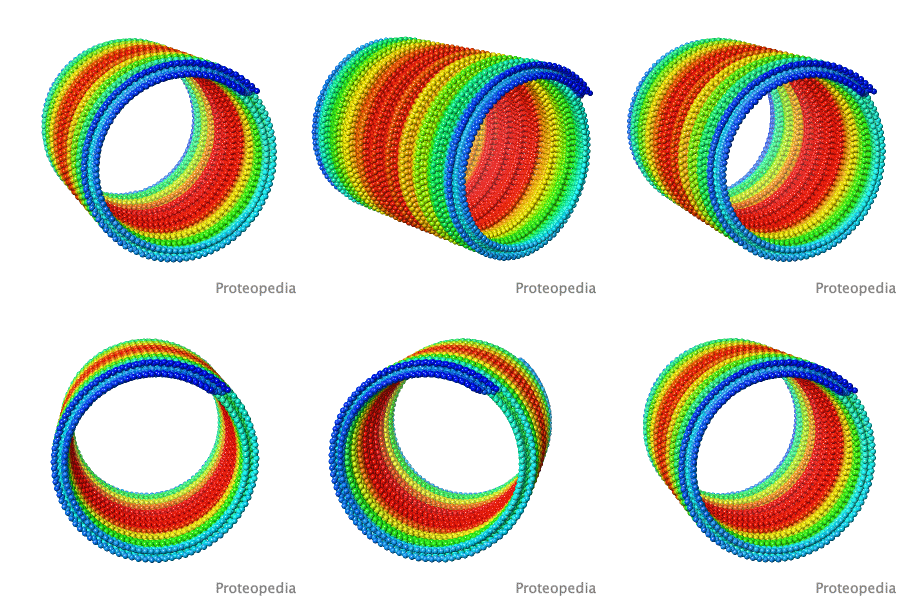
Geobacter pili: surprising function.

Y Gu, V Srikanth, AI Salazar-Morales, R Jain, JP O'Brien, SM Yi, RK Soni, FA Samatey, SE Yalcin, NS Malvankar. Nature 2021 doi: 10.1038/s41586-021-03857-w
Geobacter pili were long thought to be electrically conductive protein nanowires composed of PilA-N. Nanowires are crucial to the energy metabolism of bacteria flourishing in oxygen-deprived environments. To everyone's surprise, in 2019, the long-studied nanowires were found to be linear polymers of multi-heme cytochromes, not pili. The first cryo-EM structure of pili (2021) reveals a filament made of dimers of PilA-N and PilA-C, shown. Electrical conductivity of pili is much lower than that of cytochrome nanowires. Evidence suggests that PilA-NC filaments are periplasmic pseudopili crucial for exporting cytochrome nanowires onto the cell surface, rather than the pili serving as nanowires themselves.

>>> Visit I3DC Interactive Visualizations >>>

About this image
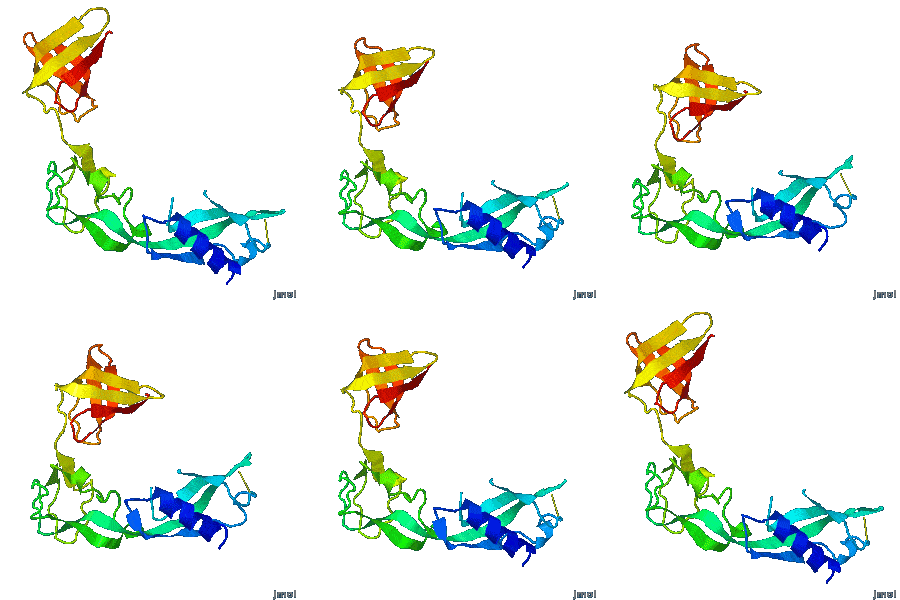
Introduction to protein structure

This tutorial illustrates some basic properties of protein structure:

  • Levels of protein structure.
  • Ways of representing protein structure.
  • Secondary structures.
  • Motifs in proteins.
  • Domains.
  • Tertiary structure.
  • Quaternary structure.

>>> Visit this page >>>

How to add content to Proteopedia

Video Guides

Who knows ...

List of Art on Science pages

About Interactive 3D Complements - I3DCs

List of I3DCs

How to get an I3DC for your paper

Teaching Strategies Using Proteopedia

Examples of Pages for Teaching

How to add content to Proteopedia

About Contact Table of Contents Structure Index Help

Proteopedia Page Contributors and Editors (what is this?)

Joel L. Sussman, Jaime Prilusky

Personal tools