This old version of Proteopedia is provided for student assignments while the new version is undergoing repairs. Content and edits done in this old version of Proteopedia after March 1, 2026 will eventually be lost when it is retired in about June of 2026.


Apply for new accounts at the new Proteopedia. Your logins will work in both the old and new versions.


Main Page

From Proteopedia

Revision as of 09:57, 21 October 2018 by Joel L. Sussman (Talk | contribs)
Jump to: navigation, search
ISSN 2310-6301

As life is more than 2D, Proteopedia helps to bridge the 3D relationships between function & structure of biomacromolecules


Selected Pages Art on Science Journals Education
About this image
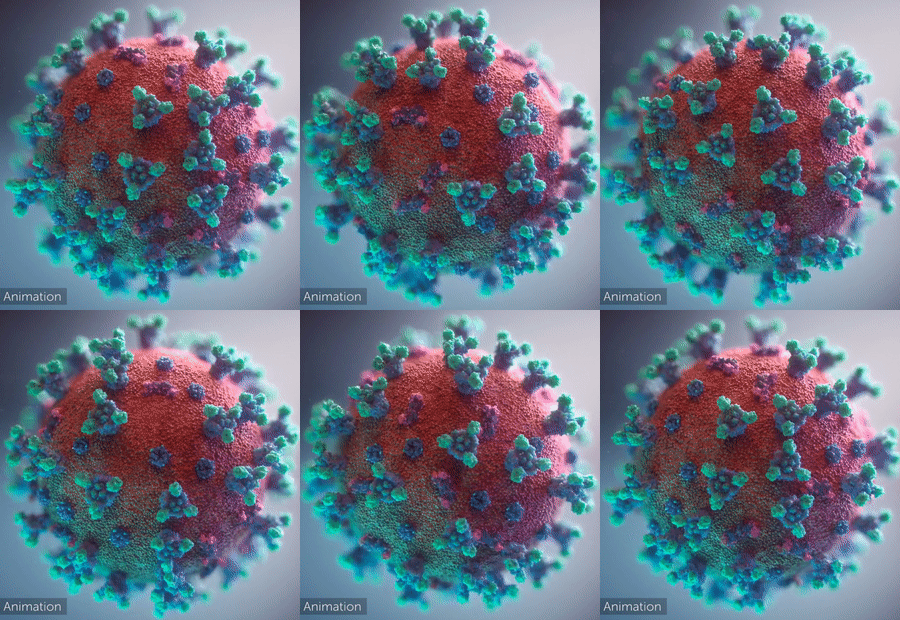
Coronavirus COVID-19

A novel coronavirus was found to be the cause of a respiratory illness first detected in Wuhan, China in 2019. 3D structural studies are aiding scientists to understand how the coronavirus infects humans and helping to find new ways to treat the viral spread (video by Fusion Animation).

>>> Visit this page >>>

About this image
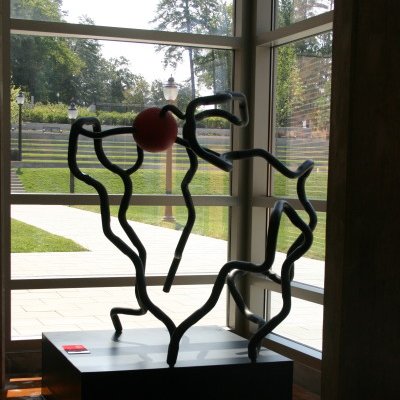
Molecular Sculpture

by Eric Martz
A historical review on sculptures and physical models of macromolecules.

>>> Visit this page >>>

About this image
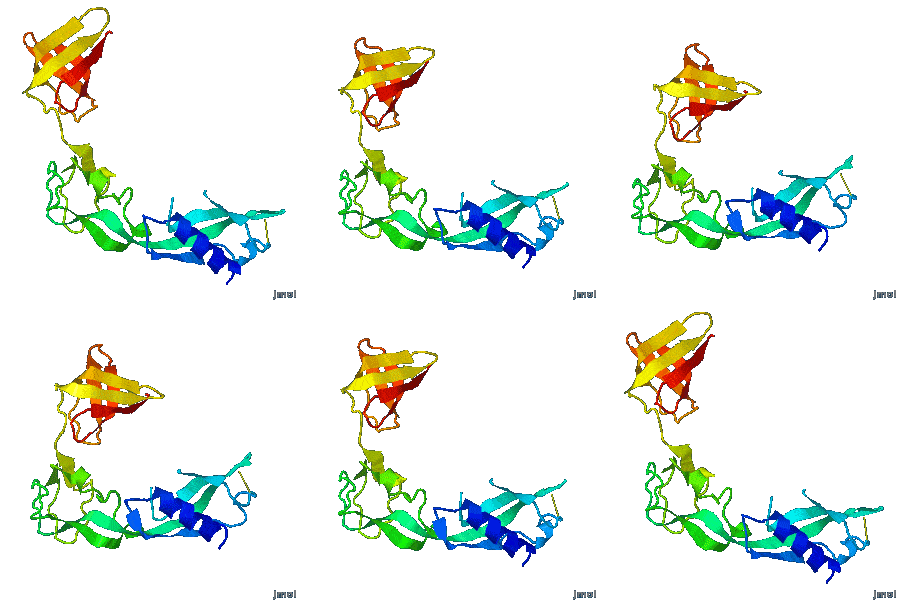
Structural flexibility of the periplasmic protein, FlgA, regulates flagellar P-ring assembly in Salmonella enterica.

H Matsunami, YH Yoon, VA Meshcheryakov, K Namba, FA Samatey. Scientific Reports 2016 doi: 10.1038/srep27399
A periplasmic flagellar chaperone protein, FlgA, is required for P-ring assembly in bacterial flagella of taxa such as Salmonella enterica or Escherichia coli. Here we present the open and closed crystal structures of FlgA from Salmonella enterica serovar Typhimurium, grown under different crystallization conditions. An intramolecular disulfide cross-linked form of FlgA caused a dominant negative effect on motility of the wild-type strain.

>>> Visit this I3DC complement >>>

About this image
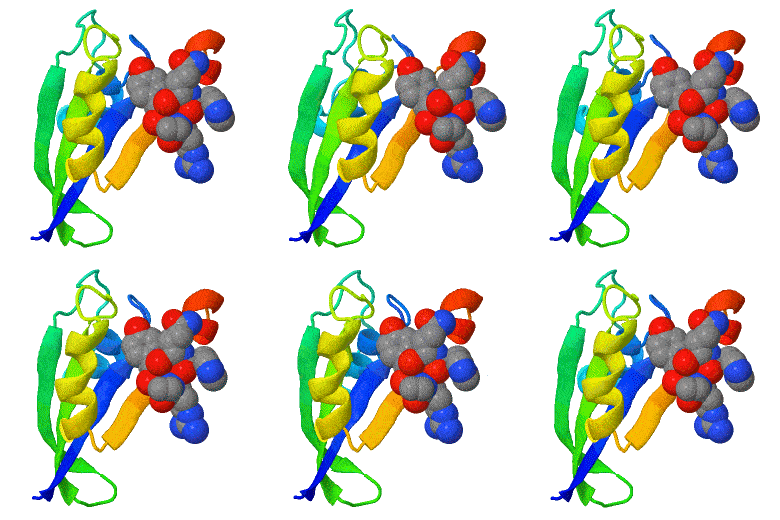
Introduction to protein structure

This tutorial illustrates some basic properties of protein structure:

  • Levels of protein structure.
  • Ways of representing protein structure.
  • Secondary structures.
  • Motifs in proteins.
  • Domains.
  • Tertiary structure.
  • Quaternary structure.

>>> Visit this page >>>

How to add content to Proteopedia

Video Guides

Who knows ...

List of Art on Science pages

About Interactive 3D Complements - I3DCs

List of I3DCs

How to get an I3DC for your paper

Teaching strategies using Proteopedia

Examples of pages for teaching

How to add content to Proteopedia

About Contact Table of Contents Structure Index Help

Proteopedia Page Contributors and Editors (what is this?)

Joel L. Sussman, Jaime Prilusky

Personal tools