This old version of Proteopedia is provided for student assignments while the new version is undergoing repairs. Content and edits done in this old version of Proteopedia after March 1, 2026 will eventually be lost when it is retired in about June of 2026.


Apply for new accounts at the new Proteopedia. Your logins will work in both the old and new versions.


Proteopedia:Featured SEL/9

From Proteopedia
Jump to: navigation, search
About this image
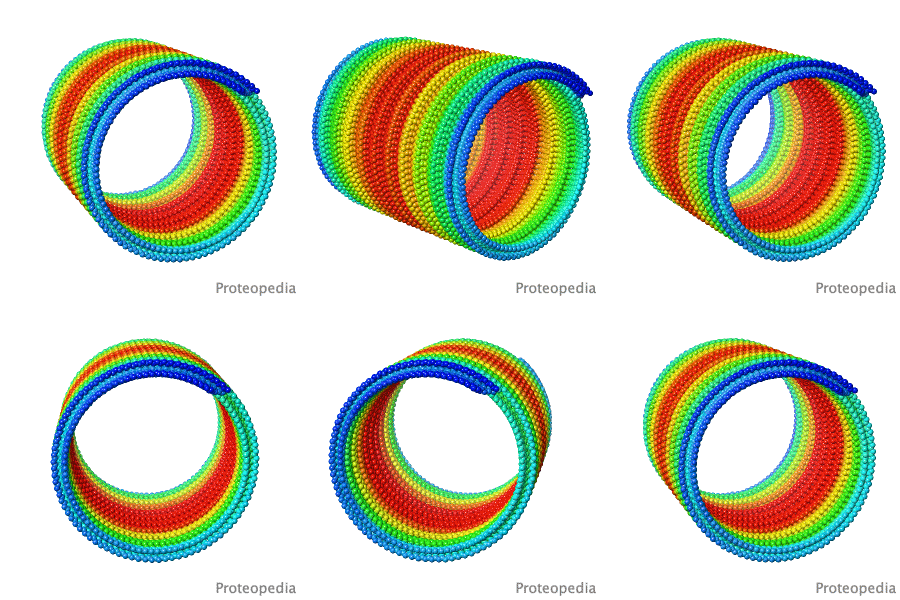
Bacteria float with nano-balloons.

ST Huber, D Terwiel, WH Evers, D Maresca, AJ Jakobi. Preprint 2022 doi: 10.1101/2022.05.08.489936
Many kinds of bacteria and archaea control their buoyancy to move to optimal positions in liquid environments. They do this by making nano-compartments called "gas vesicles", long "pipes" with closed ends filled with gases. In 2022, gas vesicle structure was solved, revealing self-assembling thin-walled cylinders of remarkable strength with gas-permeable pores and water-repelling (hydrophobic) interiors. Building on this structural knowledge, gas vesicles are being engineered to serve as biosensors that report via ultrasound.

>>> Visit I3DC Interactive Visualizations >>>

Proteopedia Page Contributors and Editors (what is this?)

Eric Martz, Jaime Prilusky

Personal tools