This old version of Proteopedia is provided for student assignments while the new version is undergoing repairs. Content and edits done in this old version of Proteopedia after March 1, 2026 will eventually be lost when it is retired in about June of 2026.
Apply for new accounts at the new Proteopedia. Your logins will work in both the old and new versions.
Sandbox Reserved 1395
From Proteopedia
(Difference between revisions)
| Line 6: | Line 6: | ||
== Function == | == Function == | ||
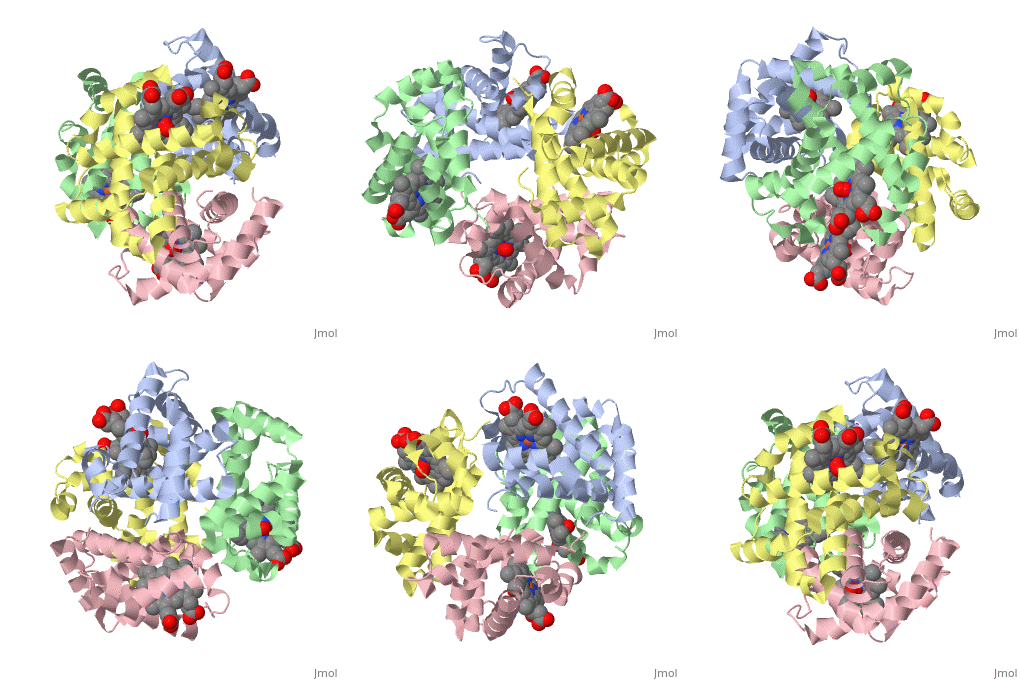
| - | Hemoglobin | + | Hemoglobin in vertebrates carries oxygen from the respiratory organs (lungs and gills) to the rest of the body tissues. About 270 million hemoglobin molecules reside in each red blood cells, which are circulated to use it to carry oxygen around the bodies of vertebrates. Hemoglobin is also what causes their blood to appear red. |
==Structural Highlights== | ==Structural Highlights== | ||
Current revision
| This Sandbox is Reserved from January through July 31, 2018 for use in the course HLSC322: Principles of Genetics and Genomics taught by Genevieve Houston-Ludlam at the University of Maryland, College Park, USA. This reservation includes Sandbox Reserved 1311 through Sandbox Reserved 1430. |
To get started:
More help: Help:Editing |
Hemoglobin
| |||||||||||