This old version of Proteopedia is provided for student assignments while the new version is undergoing repairs. Content and edits done in this old version of Proteopedia after March 1, 2026 will eventually be lost when it is retired in about June of 2026.
Apply for new accounts at the new Proteopedia. Your logins will work in both the old and new versions.
User:Wayne Chang
From Proteopedia
(→Assignment 12: IVC: Ammonium Binding Site) |
|||
| Line 3: | Line 3: | ||
'''Mapping the Ammonium binding site and explaining how it contributes to catalysis.''' | '''Mapping the Ammonium binding site and explaining how it contributes to catalysis.''' | ||
| - | Chang, | + | Chang, Yu-Wei and Kaushal, Pankaj. |
University of Maryland, Baltimore County (UMBC). | University of Maryland, Baltimore County (UMBC). | ||
---- | ---- | ||
| - | |||
| - | |||
== Script Exercises == | == Script Exercises == | ||
Revision as of 21:35, 15 November 2008
Contents |
Assignment 12: IVC: Ammonium Binding Site
Mapping the Ammonium binding site and explaining how it contributes to catalysis.
Chang, Yu-Wei and Kaushal, Pankaj.
University of Maryland, Baltimore County (UMBC).
Script Exercises
|
Outline
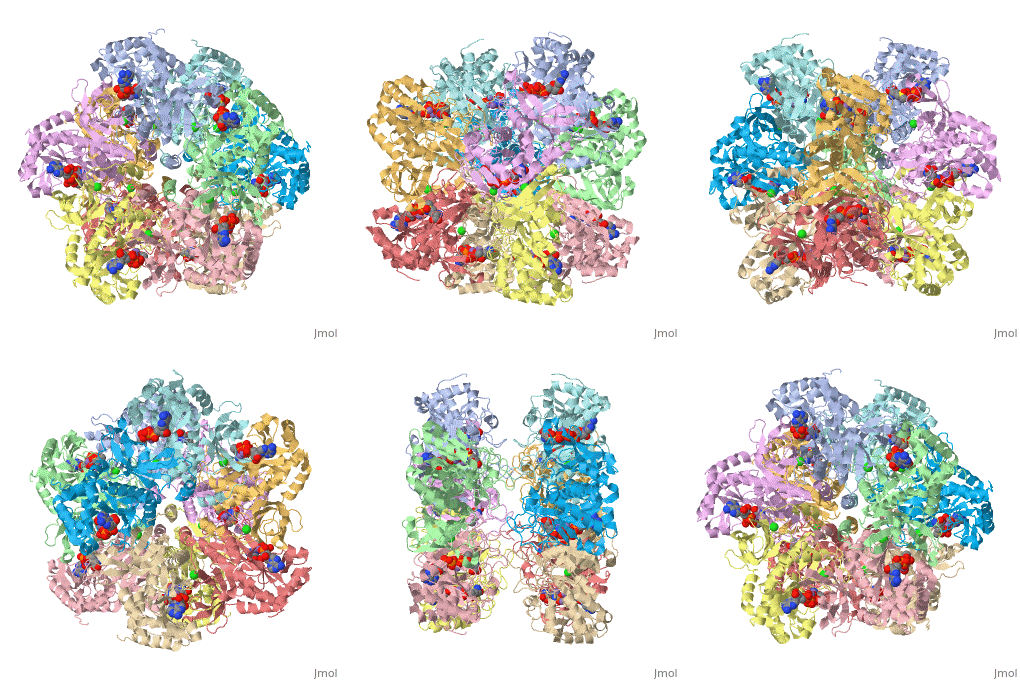
Glutamine synthetase catalyzes the condensation of glutamate and ammonia, using ATP, to form glutamine, ADP, and an inorganic phosphate group.
Glutamate + ATP + NH3 → Glutamine + ADP + phosphate
References
1. Liaw, S-H, et.al.,Discovery of the ammonium substrate site on glutamine synthetase, a third cation binding site Protein Sci. 1995 4: 2358-2365[1]
