This old version of Proteopedia is provided for student assignments while the new version is undergoing repairs. Content and edits done in this old version of Proteopedia after March 1, 2026 will eventually be lost when it is retired in about June of 2026.
Apply for new accounts at the new Proteopedia. Your logins will work in both the old and new versions.
Amyloid beta
From Proteopedia
(Difference between revisions)
| Line 1: | Line 1: | ||
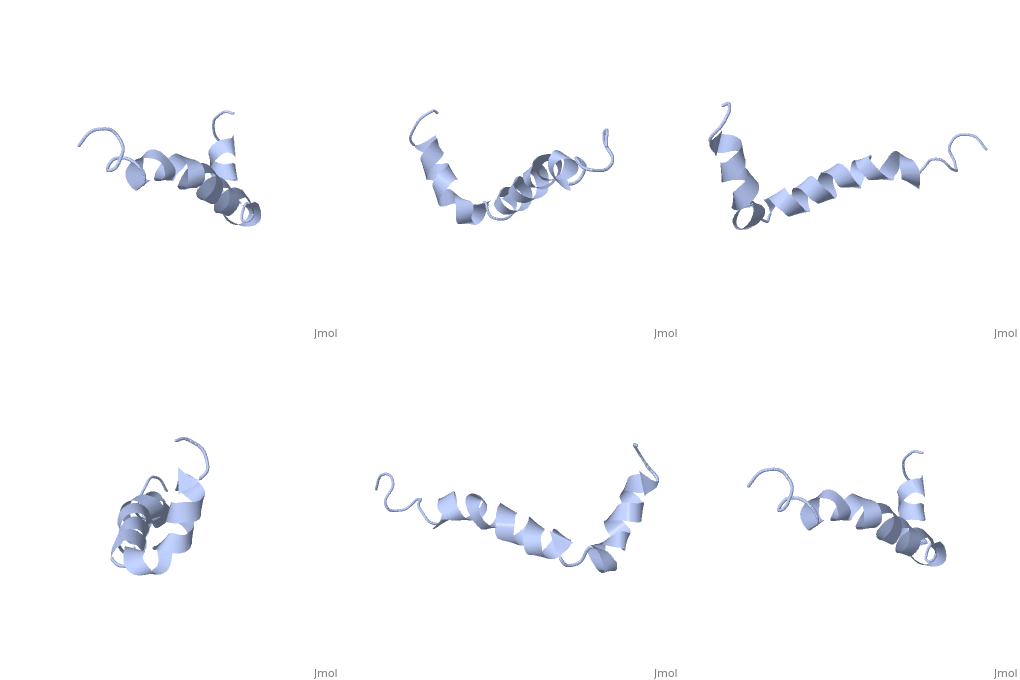
<StructureSection load=1iyt size='500' side='right' caption='amyloid-beta(1-42)', ([[1dm0]])' scene=''> | <StructureSection load=1iyt size='500' side='right' caption='amyloid-beta(1-42)', ([[1dm0]])' scene=''> | ||
==Introduction== | ==Introduction== | ||
| - | '''Alzheimer's disease''' is characterized by extracellular proteic plaques and intracellular neurofibrillary tangles.<ref name="structure">PMID: 12423364</ref> These plaques are collections of fibrils consisting mostly of beta-amyloid <scene name='Amyloid_beta/Fibrils/1'>fibrils</scene>. These | + | '''Alzheimer's disease''' is characterized by extracellular proteic plaques and intracellular neurofibrillary tangles.<ref name="structure">PMID: 12423364</ref> These plaques are collections of fibrils consisting mostly of beta-amyloid <scene name='Amyloid_beta/Fibrils/1'>fibrils</scene>. These fibrils are aggregates of beta-sheets. The oxidative stress that an affected brain is under is further proof of the toxicity of amyloid beta. When amyloid beta is in contact with metal ions and oxygen reactive oxygen species (especially hydrogen peroxide) are created. <ref name="alz">PMID:18305836</ref> |
'''Amyloids''' are insoluble fibrous proteins | '''Amyloids''' are insoluble fibrous proteins | ||
Revision as of 03:21, 26 November 2011
| |||||||||||